

Gold Rebound Capped as Focus Shifts to PPI and CPI This Week
1. Gold Returns Above the $4,430 Level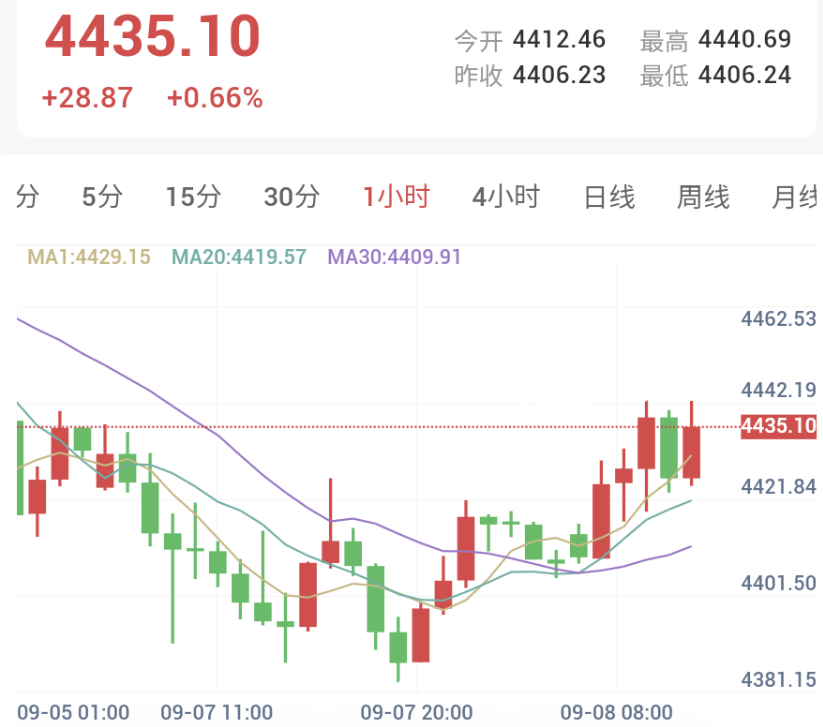
During the Asian session on September 8, spot gold staged a rebound after stabilizing near $4,400. As of midday Beijing time, gold traded at $4,435.10/oz, up $28.87 or 0.66% intraday, having opened at $4,412.46 with a high of $4,440.69 and a low of $4,406.24.
Gold closed near $4,406.23 in the prior session, under pressure from U.S. labor data and evolving Fed rate expectations. However, Tuesday's session saw fresh buying emerge near $4,400, lifting prices back above $4,430. On the 1-hour chart, the MA1, MA20, and MA30 are positioned near $4,429.15, $4,419.57, and $4,409.91 respectively, placing short-term prices back above all three moving averages.
2. U.S. August Non-Farm Payrolls Added 162k Jobs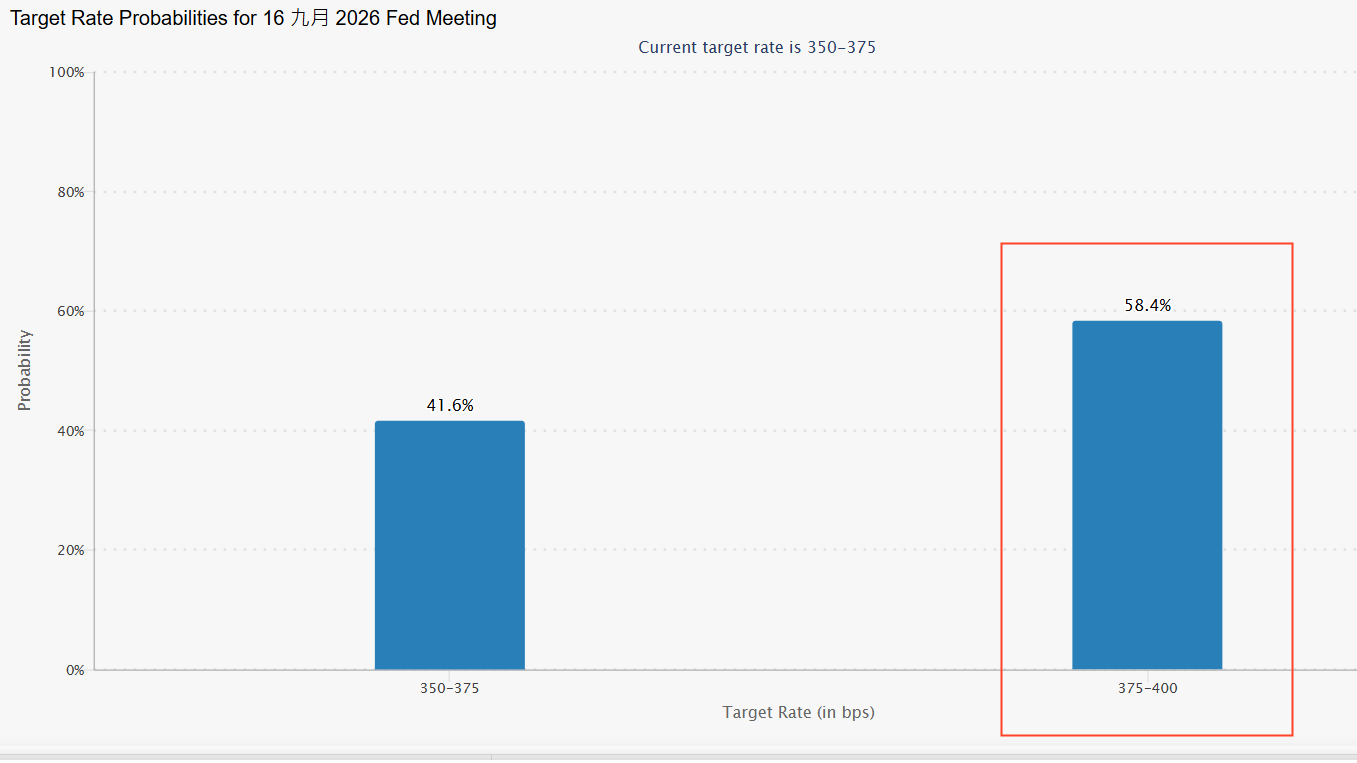
Last Friday's U.S. August employment report remains a critical market event. Data from the Bureau of Labor Statistics showed non-farm payrolls increased by 162,000, while the unemployment rate held at 4.1%. Job additions were concentrated in food services and local government education, while information services contracted. Market-implied odds for a September rate hike currently stand at 58.4%.
This print notably improved market sentiment regarding an abrupt cooling in the U.S. labor market. Following the report, expectations of further policy tightening rose, triggering gold's retreat from the $4,500 zone.
Market attention has shifted from "whether employment is faltering" to "whether price pressures remain elevated." With CME FedWatch tracking expectations via fed funds futures, probabilities may see significant swings following this week's inflation releases.
3. Middle East Geopolitical Friction Persists
Tensions between the U.S. and Iran over the Strait of Hormuz and regional military operations remain unresolved. Following reciprocal actions against maritime targets, vessel transit through vital shipping corridors remains subdued, with Iran signaling upcoming maritime navigation updates.
These developments have sustained international energy prices at elevated levels, keeping attention on potential U.S. inflation impacts. Unlike prior periods, market reactions are concentrated on energy costs and monetary policy implications rather than pure safe-haven demand.
4. China's Gold Reserves Expand for the 22nd Consecutive Month
On the official sector front, latest data indicates China's gold reserves reached 76.73 million fine troy ounces at the end of August 2026, up 650,000 ounces from 76.08 million in July, marking the 22nd consecutive month of additions.
Year-to-date figures show reserves expanding steadily from 74.19 million ounces. While short-term bullion trends remain dominated by U.S. rate expectations, sustained central bank accumulation provides crucial medium-to-long-term structural support.
5. U.S. PPI and CPI Releases Due Back-to-Back
Following the employment data, markets face two vital inflation prints. The BLS schedule lists August PPI for September 10 and August CPI for September 11, both scheduled for 8:30 AM EDT.
Persistently elevated prints will likely sustain expectations for further September policy tightening. Conversely, a noticeable deceleration could cool rate hike wagers ignited by the robust jobs report.
Market Outlook
Gold has recovered from the $4,406 area to $4,435.10, with the $4,400 psychological mark providing temporary support. Short-term overhead resistance lies first at $4,440–$4,450, followed by $4,500, while $4,400 remains the key downside reference.
The decisive catalysts for the next leg of direction are Thursday's PPI and Friday's CPI. With labor market resilience established, whether inflation data justifies further Fed tightening will determine gold's capacity to re-approach the $4,500 threshold.