

1. Gold Stages Rapid Rebound After Tapping $4,283 Low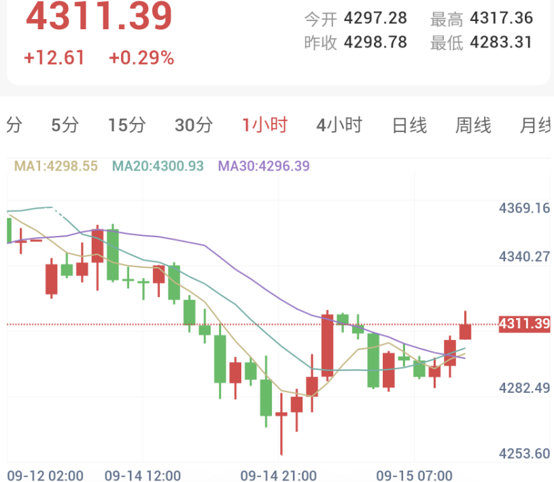
During the Asian session on September 15, spot gold mounted a recovery following consecutive declines. As of current market quotes, gold trades at $4,311.39/oz, up $12.61 (+0.29%) intraday, having opened at $4,297.28, reaching an intraday low of $4,283.31 before climbing swiftly to peak at $4,317.36.
In the previous session, bullion dropped to $4,253.54—its lowest level since early August—before settling near $4,298 with an intraday decline of roughly 1.1%. Entering Tuesday, fresh buying emerged near $4,280, lifting prices back above the $4,300 threshold. However, on the 1-hour chart, the MA30 remains around $4,296, while overhead resistance between $4,340 and $4,370 remains significant.
2. Resilient Inflation Data Propels Rate Hike Probability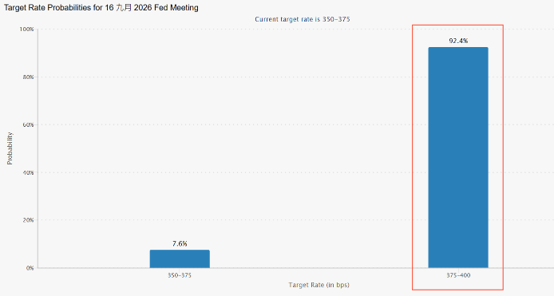
The primary macro catalyst weighing on bullion continues to be robust August US inflation metrics.
Upstream PPI prints indicated resurgent price pressures in production pipelines, which were subsequently reinforced by higher-than-expected consumer inflation data, prompting market participants to aggressively lift tightening wagers for the September FOMC meeting.
CME FedWatch data reveals that market-implied odds of a 25 bps rate hike at the September 15–16 meeting have surged to approximately 93%, up sharply from around 60% just a week ago.
Chair Kevin Warsh reiterated at Jackson Hole that the Fed still has work to do if inflation does not retreat decisively toward 2%. With employment resilient and price metrics firming, expectations for continued policy tightening have solidified rapidly.
3. Middle East Hostilities Keep Energy Overhead High
Concurrently, geopolitical conditions across the Middle East continue to deteriorate.
Yemen's Houthi movement launched renewed missile and drone strikes against southern Saudi military and energy infrastructure. A vital Saudi crude pipeline that serves as an alternative bypass to the Strait of Hormuz remains shuttered following previous attacks.
Commercial transit through the Strait of Hormuz itself has yet to normalize, with Iranian officials emphasizing ongoing maritime control and previously scheduled corridor negotiations being postponed.
Driven by physical disruption risks, Brent crude touched highs near $109.80 on Monday before holding comfortably above $106. Elevated energy costs compound market fears of persistent headline inflation, cementing expectations for tighter Fed policy.
4. Treasury Yields Briefly Cross the 5% Threshold
Sovereign debt markets experienced dramatic shifts, with the 10-year US Treasury yield touching 5.014% on Monday—crossing the 5% psychological barrier for the first time since 2023—while the 2-year yield rose to 4.679%.
Concurrently, the US Dollar Index climbed to 99.73, printing a two-week peak.
Surging bond yields paired with dollar strength exerted relentless downward pressure on non-yielding bullion, framing gold's rapid decline from near $4,500 down toward $4,250.
5. Market Focus Pivots to FOMC Rate Decision and Forward Path
With the immediate rate hike largely priced in, market sensitivity now shifts toward the Fed's forward policy language and guidance.
Attention centers on the updated Summary of Economic Projections (dot plot), Warsh's press conference remarks, and whether the committee signals an additional rate increase before year-end. If the Fed maintains an aggressive hawkish stance, gold could face continued headwinds; conversely, any moderation in forward guidance could spark a sharp relief rally.
At present, gold has recovered from $4,283.31 to trade near $4,311.39, re-establishing footing above $4,300. Short-term overhead resistance lies between $4,320 and $4,340, while support rests at $4,280 followed by the $4,253 trough. Expect heightened volatility around $4,300 leading into the FOMC decision.
Rate Hike Odds Surge to 93% as Gold Briefly Dips Below $4,300: Bulls Counterattack Ahead of FOMC
Published: 2026-09-15 11:52:10