

I. NFP Summary: Employment Cools Significantly, Labor Force Exits Accelerate
The US June non-farm payrolls data showed a sharp slowdown, with job growth falling far short of market expectations, alongside substantial downward revisions to the previous two months' data. Although the headline unemployment rate ticked down slightly, this drop was primarily driven by a massive wave of individuals leaving the labor market. Overall, the job market is exhibiting clear signs of further cooling, which has successfully alleviated near-term anxieties over an imminent interest rate hike by the Federal Reserve.
II. Core Data Extraction and Breakdown: Slowdown Signals Flashed Across the Board
Job Growth Misses Estimates by a Mile:
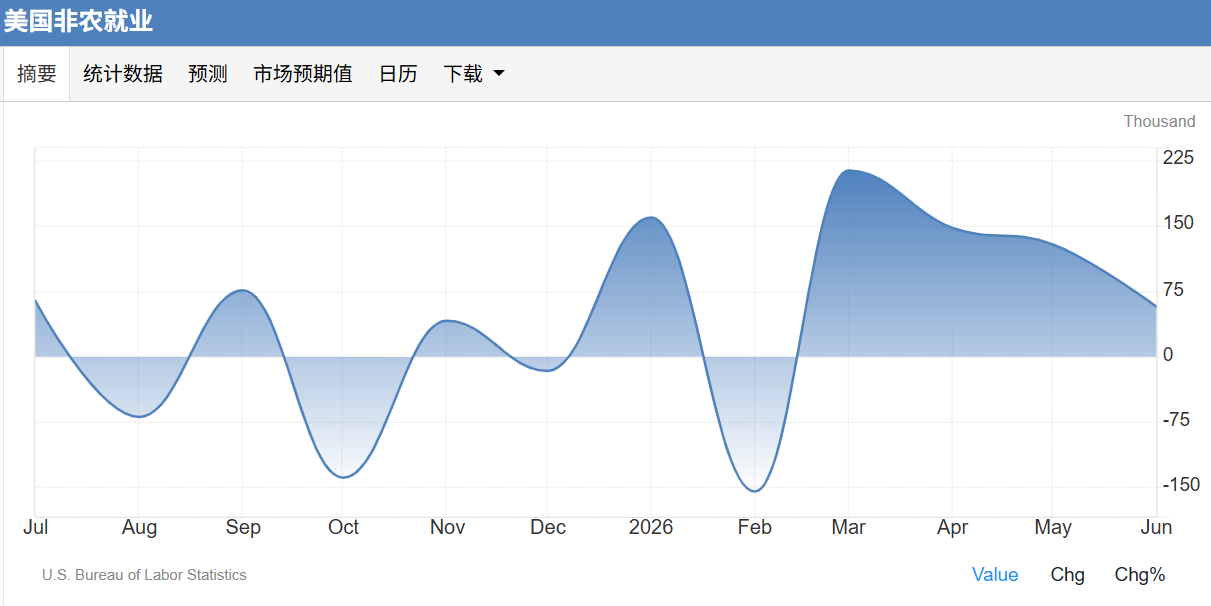
Non-farm payrolls increased by only 57,000 jobs in June, roughly half of the market consensus forecast of 110,000. Concurrently, business surveys revealed that job additions for April and May were revised down by a cumulative 74,000 positions (with May's reading slashed from 172,000 to 129,000). This dragged average monthly job growth for the second quarter down to 111,000.
Unemployment Rate Drop Driven by Workforce Exits:
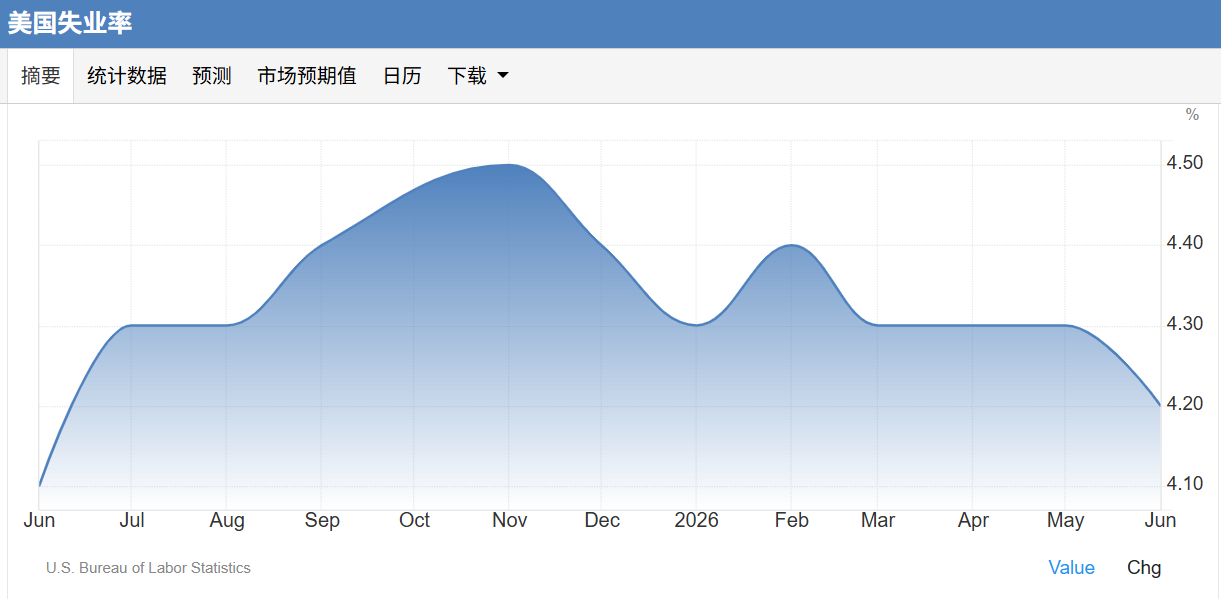
The June unemployment rate pulled back from May's 4.3% to 4.2%. However, this shift was not a reflection of labor market strength; the household survey showed that actual employment fell by 507,000 during the month. The true catalyst behind the lower unemployment rate was a staggering 720,000 people dropping out of the labor force.
Participation Rate Sinks to a Five-Year Low:
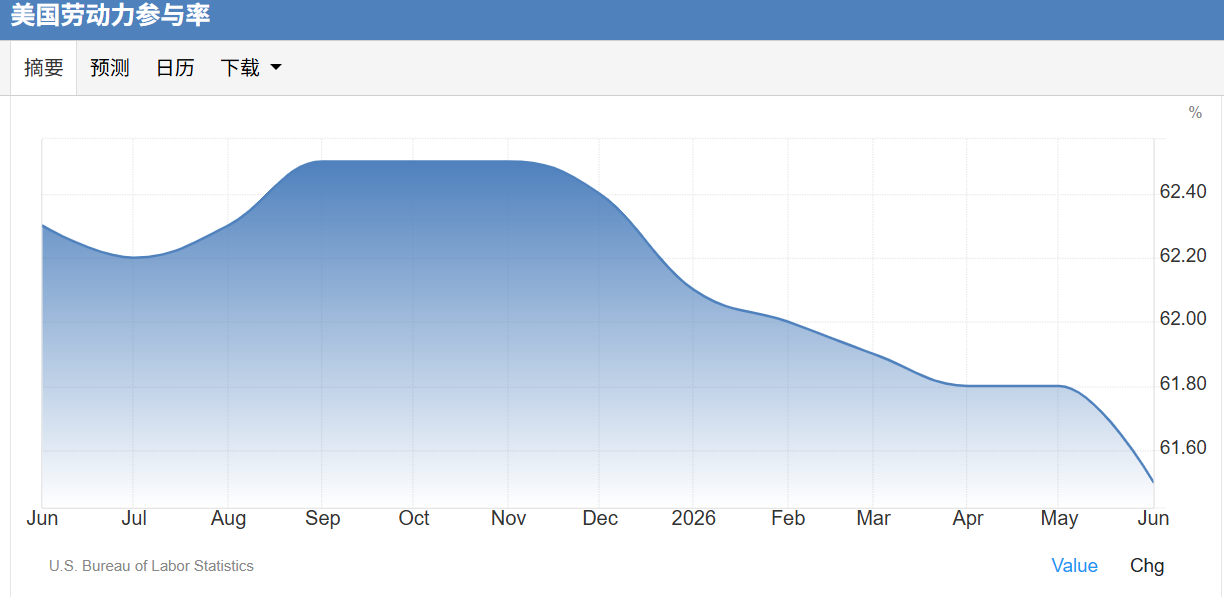
The labor force participation rate dropped from May's 61.8% to 61.5%, marking its lowest print since March 2021. Within this metric, the participation rate for prime-age workers (ages 25 to 54) also slumped by 0.6 percentage points to 83.3%.
Wage Growth Continues to Lag Behind Inflation:
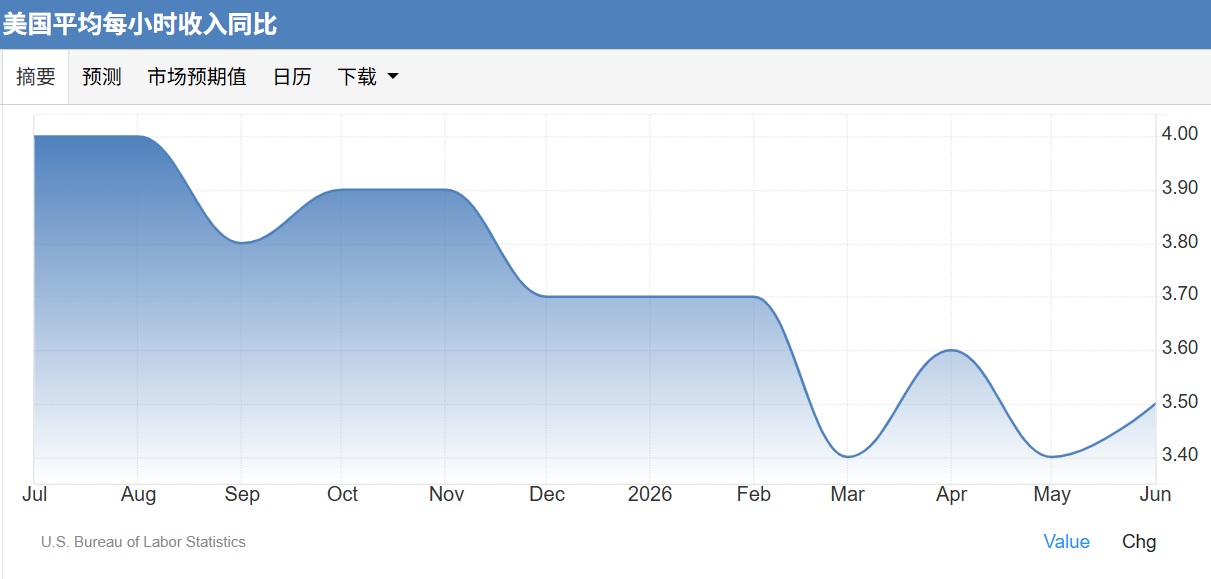
Average hourly earnings rose by 3.5% year-over-year (up marginally from May's 3.4%), hovering at a moderate level that shouldn't spark extra inflationary triggers. However, compared to the hot 4.2% annual CPI growth logged in May, wage growth continues to fall behind inflation, eroding the real purchasing power of households.
III. Deeper Realities Reflected by the Data
The weakness in the June employment data reflects the lagging impact of macro conditions and restrictive policy on actual business activity:
- High Oil Prices Backlash on Service Sectors: Leisure and hospitality shed a massive 61,000 positions in June, marking its deepest single-month contraction since the pandemic era. Within the sector, restaurants and bars cut 33,000 jobs, while hotels laid off 22,000 workers. Although oil prices have recently eased, they remain well above where they started the year. Economists note that rising living costs are forcing low-to-middle-income consumers to scale back discretionary spending like dining out and traveling, prompting service-sector employers to grow pessimistic about summer demand and slow down hiring.
- Tightening Immigration Policies Speed Up Workforce Attrition: The steep drop in labor force participation is closely linked to the current administration's strict immigration policies. The total workforce has shrunk in four out of the last six months; the decelerating influx of new immigrants has directly cut off a vital source of labor supply replenishment.
- The "Low Hiring, Low Firing" Paradigm Persists: The current backbone of the labor market remains a historically low layoff rate. Having recently endured severe labor shortages, companies are still highly reluctant to downsize; however, faced with a murky economic and geopolitical environment, their appetite for net new hiring is equally weak.
IV. Market Expectations and Institutional Views: Near-Term Rate Hike Pressure Ease
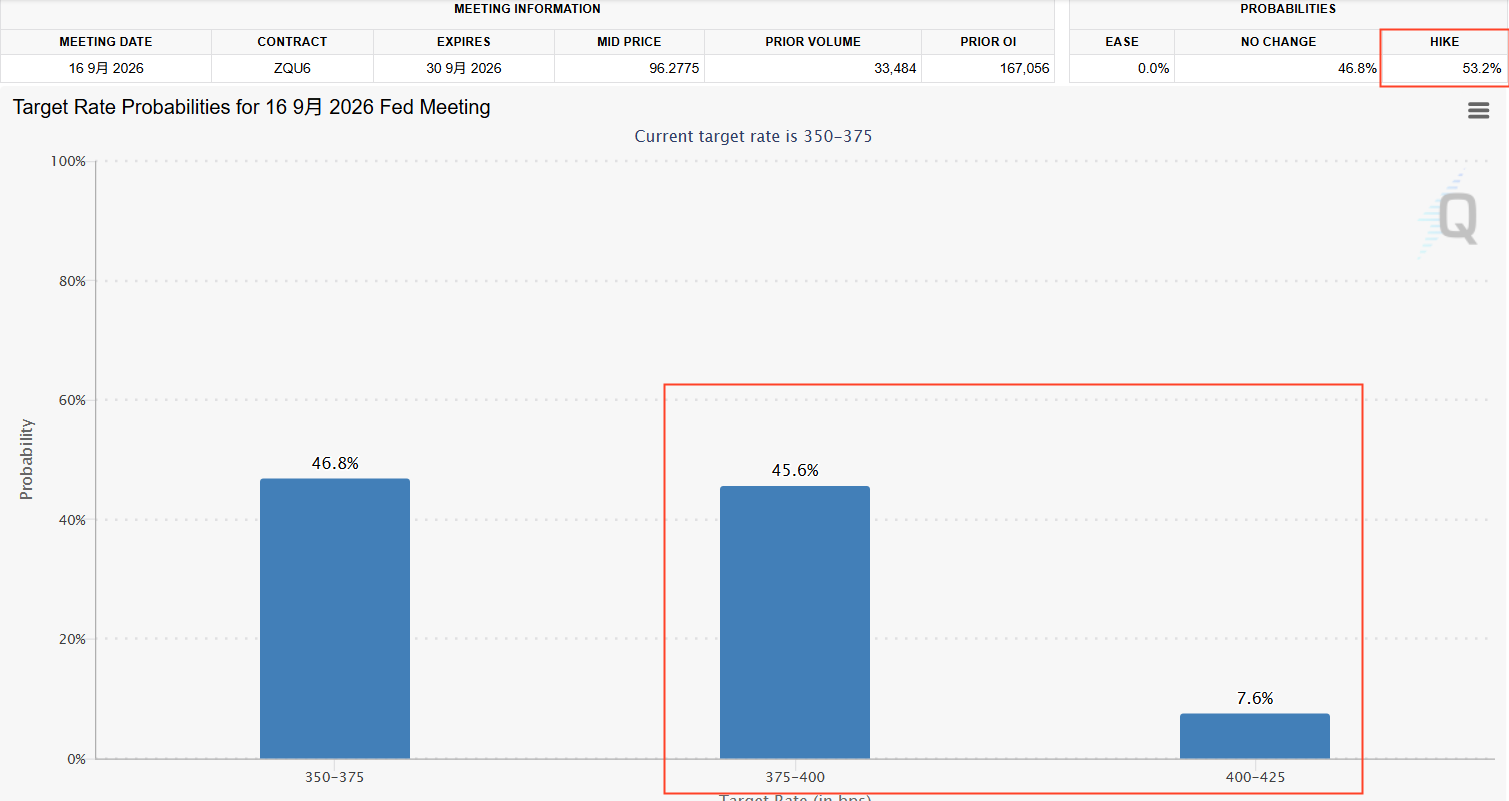
This cooling payrolls report has allowed investors to breathe a sigh of relief, dialing back market expectations for aggressive near-term monetary tightening by the Fed.
- Rate Hike Bets Cool Down: Interest rate futures pricing shows that traders now place the probability of a Fed rate hike at the July meeting below 20%. Projections for a September rate hike have also pulled back to around 50%, down from roughly 75% right before the data release.
- Institutional Commentaries:
- Santander U.S. Capital Markets: "Most policymakers will still view the labor market as stable and tracking at a lukewarm pace. The market delivered a knee-jerk reaction by cutting full-year rate hike probabilities, but this might be a bit of an overinterpretation."
- 50 Park Investments: "This employment report offers a relief valve for anyone worried that the Fed was on the verge of hiking rates immediately. It doesn't mean inflation worries are dead, but it takes the immediate pressure off the central bank to pull the trigger."
- Principal Asset Management: "The deceleration in job growth challenges the narrative built over recent months that the labor market was re-accelerating. This reinforces the view that the Fed faces zero urgency to hike rates."
Summary and Outlook
The June 2026 NFP report snapped the trend of accelerating job growth seen in previous months, painting a clear picture of a gradually cooling labor market. This offers a relatively friendly signal for the Federal Reserve, allowing policymakers to avoid immediate, aggressive rate hikes in the face of elevated inflation and giving them more breathing room to evaluate the economy's path.
Investor Takeaways: As employment figures weaken at the margin, the market's trading focus will temporarily shift back to upcoming inflation prints and corporate fundamentals.
For equities, the easing of interest rate pressures offers a short-term tailwind, though long-term gains still require corporate earnings to validate current high valuations.
For gold, prices are well-positioned to maintain a relatively strong footing if US economic indicators continue to flash signs of fatigue, provided Middle East tensions continue to thaw. Moving forward, keep a close watch on the upcoming US Consumer Price Index (CPI) release.