

I. Introduction: Key Validation Following August's Strong Rebound
The US Bureau of Labor Statistics will release the September non-farm payrolls report on Friday, October 2, 2026, at 20:30 Beijing time. This report marks the first employment data release following the Fed's September rate hike and will serve as a crucial basis for markets to gauge the subsequent policy tightening pace.
Non-farm payrolls increased by 162k in August, with the unemployment rate holding steady at 4.1%. Job additions for June and July were revised upward to 31k and 21k respectively, bringing a cumulative upward revision of 55k. Average hourly earnings rose 0.3% month-on-month and 3.1% year-on-year. However, August job gains were heavily concentrated in food services and local government education, making September's data vital to confirm true employment momentum.
II. Core Employment Indicator Forecasts: Expected to Ease Toward 90k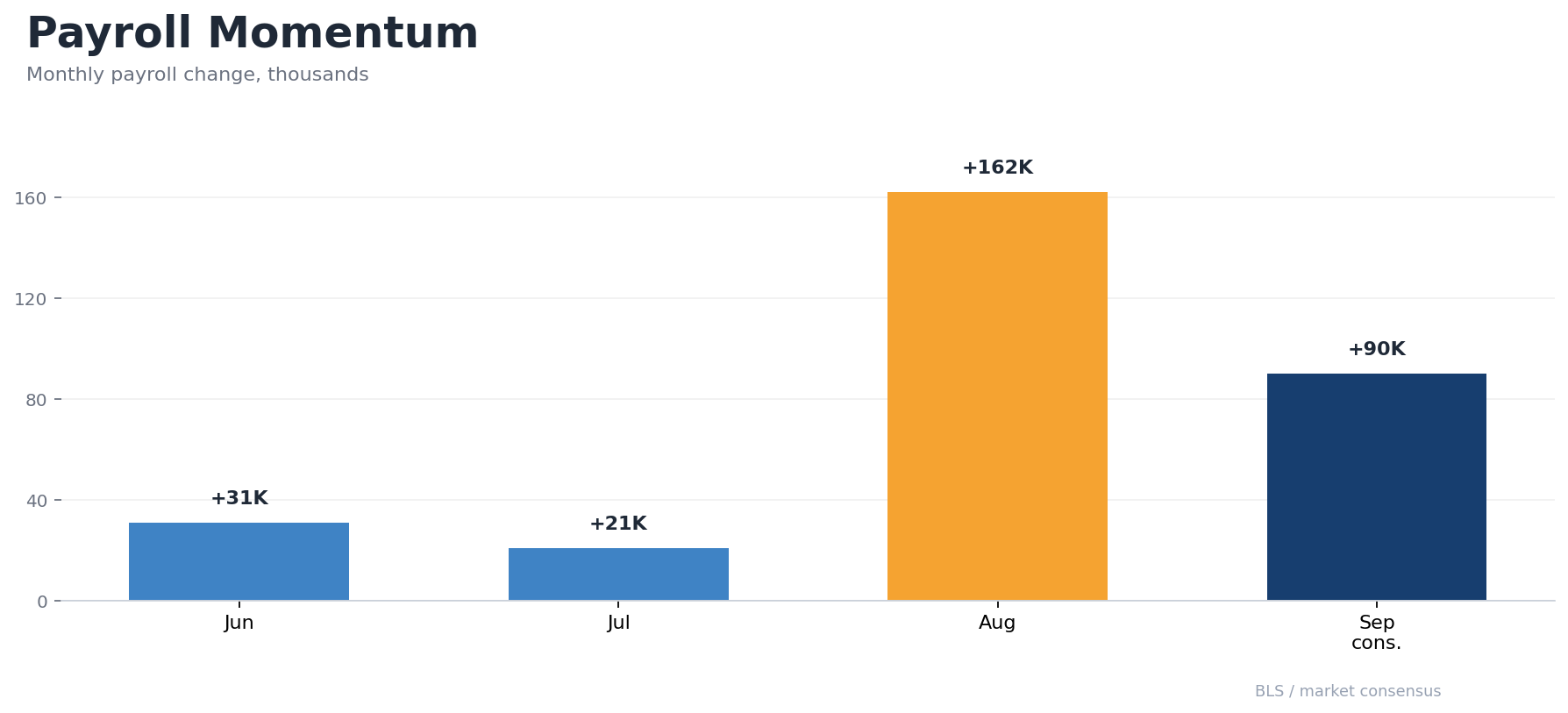
Non-Farm Payroll Additions: Market consensus centers around +90k, significantly below August's +162k. A reading near this level would indicate that employment expansion continues, but hiring velocity has cooled.
Unemployment Rate: Projected to remain around 4.1%. If job growth slows while unemployment stays stable, it will reinforce the 'low hiring, low layoffs' narrative.
Average Hourly Earnings: Market projections estimate monthly growth of about 0.3%. If wages come in significantly higher than expected, it could reignite service-sector inflation and subsequent rate hike risks.
III. Leading Indicators: Hiring Slows, But Layoffs Remain Low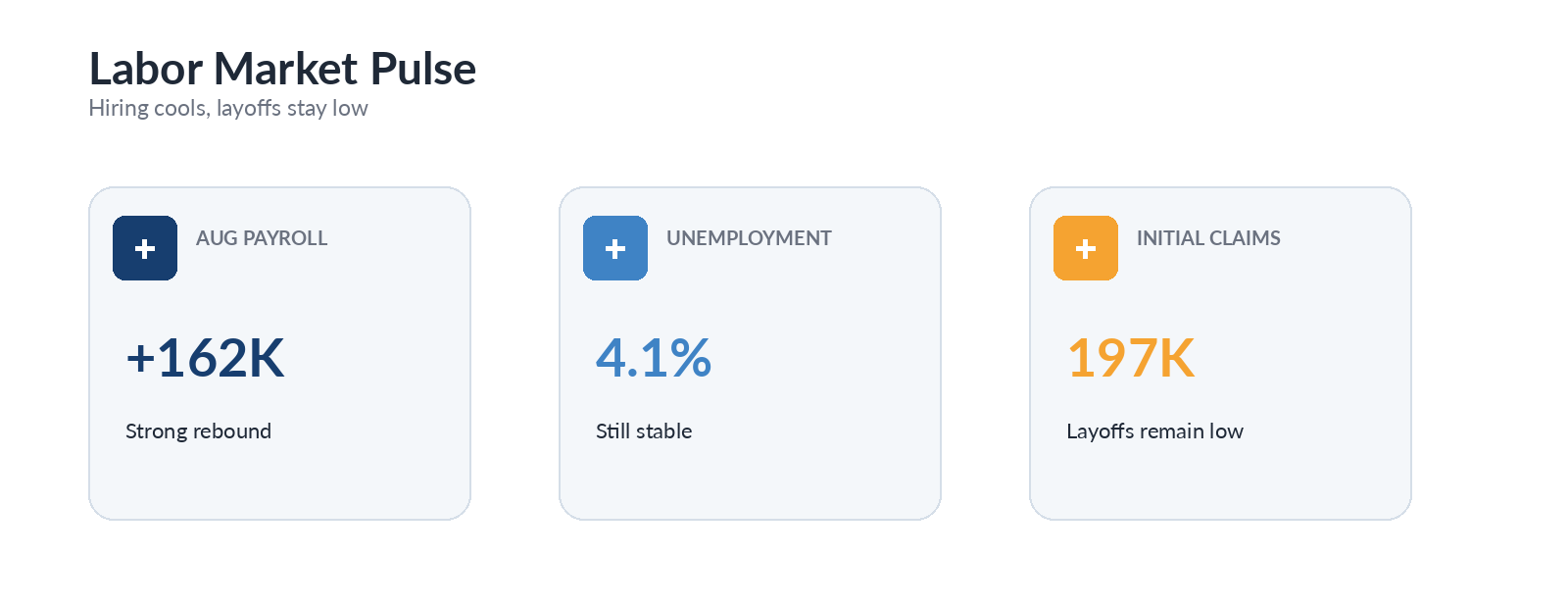
Recent layoff figures remain stable. For the week ending September 19, US initial jobless claims stood at 19.7k, with the 4-week moving average hovering around 202k, indicating that widespread corporate layoffs have not materialized. The labor market remains close to a 'low hiring, low layoff' equilibrium.
This Tuesday's JOLTS job openings, Wednesday's ADP private employment, and Thursday's ISM manufacturing employment will serve as essential reference points. Current market forecasts expect September ADP employment to increase by approximately 72k, up from 38k in August. Should job openings and ADP both print soft, NFP expectations could face further downward revisions.
IV. Three Key Focus Areas in This NFP Report
First, whether August's rebound can be sustained. August saw strong job gains, but food services and local government education contributed disproportionately. If these sectors pull back in September without private services and manufacturing stepping up, August's strong print may look more like a transient bounce.
Second, whether prior data revisions alter the broader trend again. The August report incorporated a combined upward revision of 55k for June and July, highlighting that revision numbers can significantly reshape market perceptions of employment trends. The upcoming report should not be evaluated on September's single-month print alone.
Third, whether wage growth continues to cool. August average hourly earnings grew 3.1% year-on-year. If September employment slows while wage acceleration picks back up, the Fed may maintain a hawkish stance; if both employment and wages cool concurrently, further rate hike pressure will ease.
V. Fed and Market Implications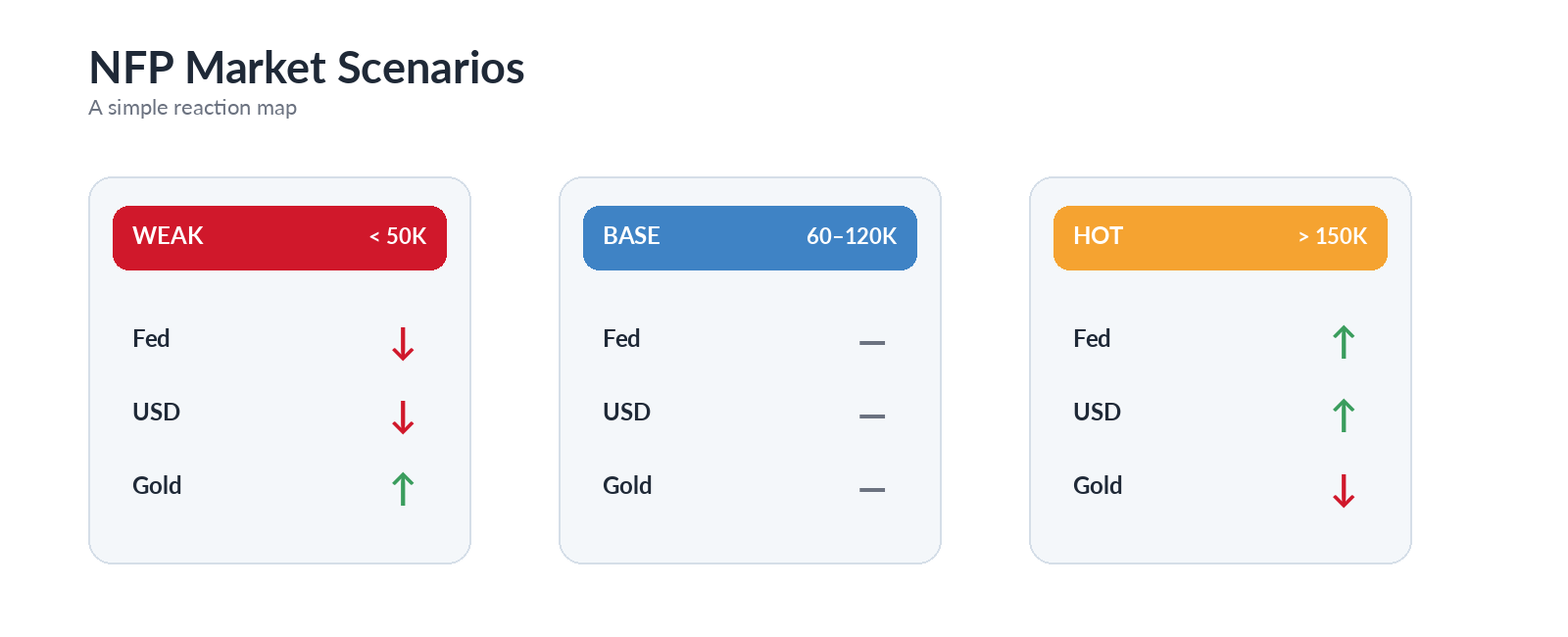
If September payroll additions exceed 150k alongside robust wage growth, markets may conclude that August's rebound was no fluke, driving up subsequent rate hike expectations. The US dollar and Treasury yields would likely strengthen, placing downside pressure on gold.
If job gains print between 60k and 120k with the unemployment rate holding near 4.1%, it would align with the baseline 'moderate cooling' scenario. Market focus would likely rotate back toward inflation metrics such as PCE and CPI.
If non-farm employment prints below 50k or turns negative alongside a rising unemployment rate, it would heighten concerns over a cooling labor market, dampening expectations for further rate hikes while pressing the dollar and Treasury yields lower, thereby providing stronger support for gold.
VI. Summary
Overall, a noticeable pullback in September non-farm payrolls relative to August is highly probable, with market consensus targeting around 90k additions and a 4.1% unemployment rate. This implies that employment growth is decelerating, though large-scale layoffs or a typical recessionary deterioration remain absent.
Consequently, market participants must monitor job growth, the unemployment rate, labor force participation, average hourly earnings, and prior revisions simultaneously. With the Fed having resumed rate hikes and inflation remaining elevated, this Friday's data will serve as a vital anchor for evaluating the upcoming policy tightening trajectory.
September 2026 Non-Farm Payrolls Preview: Hiring Set to Slow as Fed Rate Hike Expectations Surge
Published: 2026-09-28 10:36:43