

I. NFP Summary: Overall Data Analysis
The US September Non-Farm Payrolls (NFP) data presented extreme contradictions, showing a labor market where resilience and underlying worries coexist.
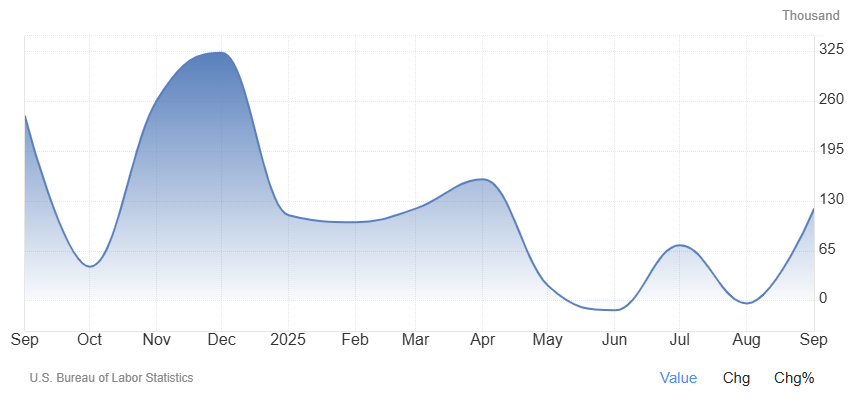
- Job Growth Massively Beat Expectations: NFP employment increased by 119,000 in September, far exceeding the market expectation of 51,000, marking a strong rebound after August's negative growth.
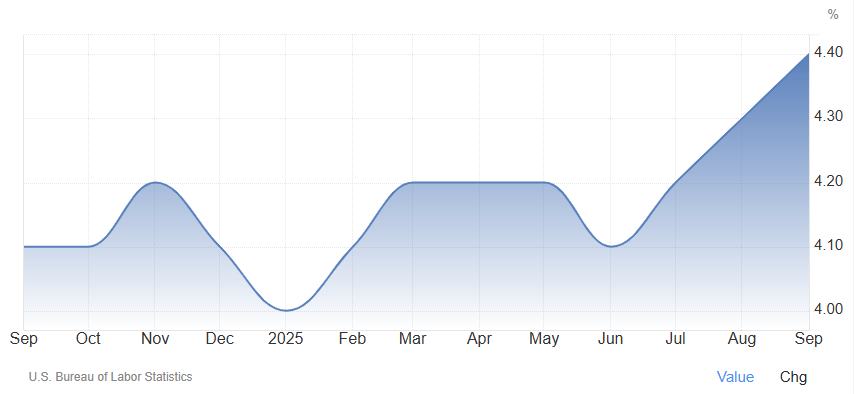
- Unemployment Rate Unexpectedly Climbed: The September unemployment rate rose by 0.1 percentage point to 4.4%, hitting its highest level since October 2021. This was mainly driven by the labor force participation rate ticking up to 62.4% (the second consecutive monthly increase) and the total labor force expanding by 470,000 to a record high of 171.2 million.
- Shocking Revisions to Previous Data: August's figure was revised down from +22,000 to -4,000 (turning into negative growth), and the combined downward revision for July and August totaled 33,000, continuing the 2025 pattern of "persistent downward revisions."
- Wage Growth Moderated Significantly: Average hourly earnings grew 3.8% year-over-year (slightly beating expectations), but rose only +0.2% month-over-month, marking the smallest monthly gain since June and signaling further relief from inflationary pressures.
II. Special Background: The Data "Vacuum" Caused by the Government Shutdown
Due to the longest government shutdown in US history lasting 43 days, the September report was delayed and finally released on November 20. The full October report was completely canceled, and the data for October and November will be combined and released on December 16 (a week after the Federal Reserve's December meeting).
Crucial metrics, including the unemployment rate for that period, will be permanently missing. This makes the September report the very last employment snapshot the Fed will see before its December 9–10 meeting, making their decision-making process unprecedentedly difficult.
III. Historical Trends and Structural Worries
- Job Growth Disparity Widened: Following a strong run from January to April, employment growth cooled significantly from May to September, with August already dipping into negative territory.
- Severe Sector Divergence: Service categories showed strength, with healthcare adding 43,000 jobs and food services up 37,000. Conversely, transportation and warehousing shed 25,000 jobs, and manufacturing fell for the sixth straight month.
- Multiple Pressures: Labor demand is being held down by a mix of AI impacting entry-level roles, uncertainty surrounding Trump’s tariff policies, and a slowdown in immigration.
IV. Instant Reactions from Institutions and Markets
The market was deeply split following the report:
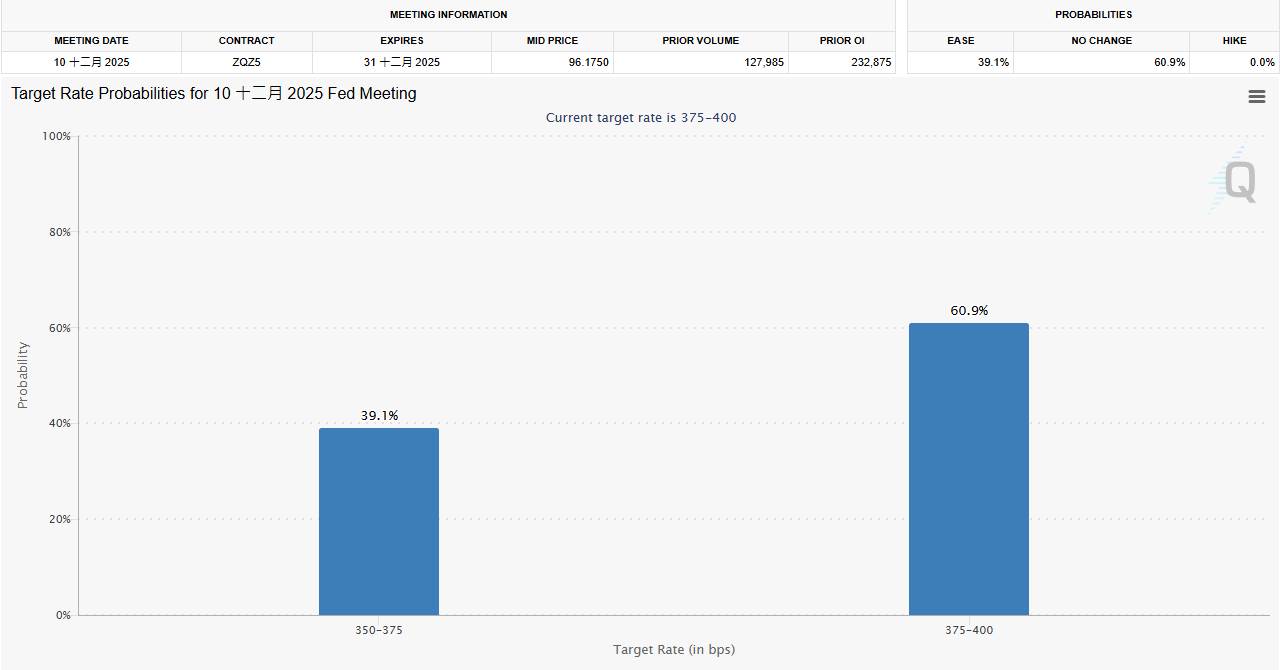
- The CME FedWatch Tool showed the probability of a 25-basis-point rate cut in December quickly bounced back from 30% to 40%.
- Morgan Stanley flatly dropped its forecast for a December rate cut, taking a hawkish view of the strong headline job growth. Meanwhile, dovish analysts seized on the new high in the unemployment rate and cooling wages.
- TD Securities noted that this is a textbook "ambiguous" report, providing ammunition to both hawks and doves.
- Jerome Powell had previously warned that a December rate cut is "far from a done deal," and this data vacuum is bound to deepen divisions within the Fed.
V. Gold Price Forecast After This NFP Release
The September NFP triggered wild swings in gold, leaving its short-term direction blurred.
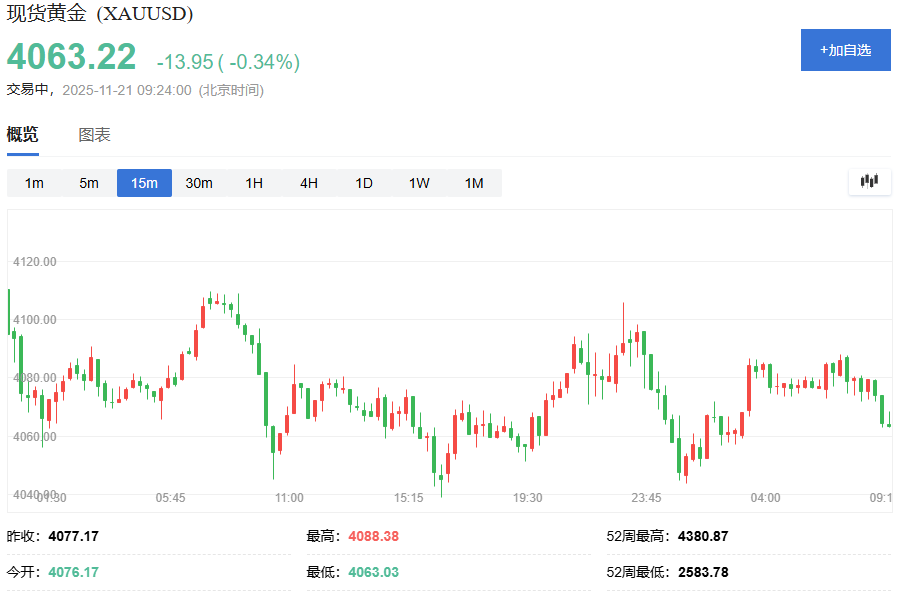
- Short-Term Drivers: The better-than-expected job growth initially dented rate-cut expectations, causing gold prices to plunge during intraday trading. On the morning of November 21 in the Asian market, spot gold consolidated in a tight range around $4,063.22 per ounce. However, the rise in the unemployment rate to 4.4% alongside the upcoming data vacuum reignited dovish hopes, causing US Treasury yields to retrace and gold prices to bounce back toward the close.
- Medium-to-Long-Term Logic: The three pillars supporting gold remain fully intact: central bank gold-buying sprees, geopolitical uncertainty (with back-and-forth updates on Russia-Ukraine peace talks), and a downward cycle for real interest rates. UBS recently set a target of $4,500 per ounce by mid-2026.
In summary, this delayed and highly contradictory September NFP report leaves the Fed in a "data vacuum" dilemma for its year-end decision, with both hawks and doves finding facts to suit their narratives. Whether the Fed cuts rates in December remains up in the air. For gold, short-term volatility is just a normal digestive phase; the foundation of its structural bull market remains rock-solid, making any price dips an ideal opportunity for investors to build positions.