

I. NFP Summary: Overall Data Analysis
The US November Non-Farm Payrolls report presented a tale of two realities, with a rebound in jobs mixed with worries over unemployment. While the labor market showed resilience despite disruptions from the government shutdown, clear signs of cooling remain.
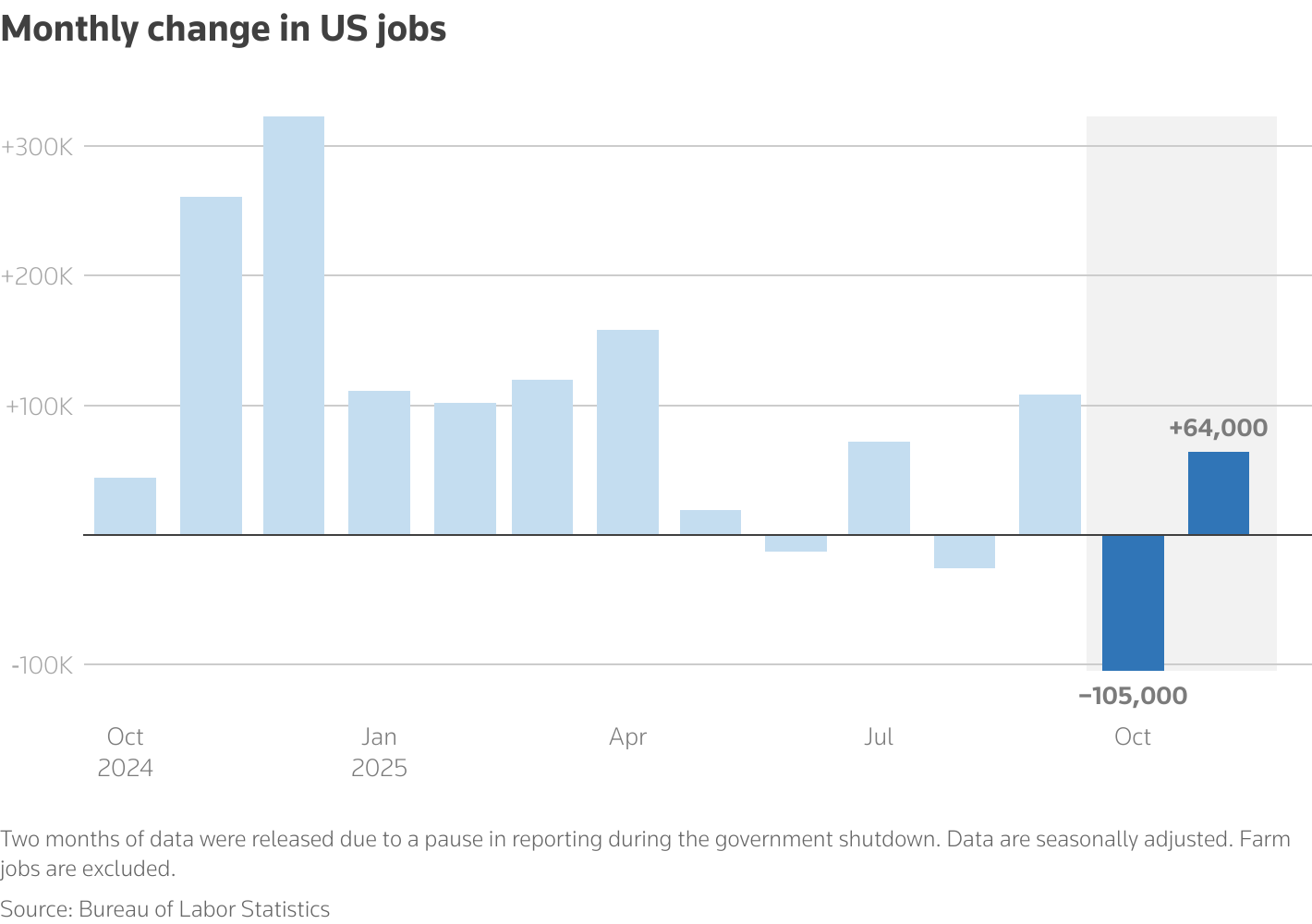
- Job Growth Rebounded Past Expectations: November payrolls increased by 64,000, higher than the market expectation of around 50,000. This successfully reversed October's heavy loss of 105,000 jobs, which was mostly triggered by a sharp drop of 162,000 federal government positions. Over the past three months, private sector employment grew by an average of 75,000 per month, showing that labor demand hasn’t drastically fallen apart.
- Heavy Downward Revision to Previous Data: October’s employment figure was significantly revised downward to -105,000, capturing the severe shock the government shutdown dealt to public sector jobs.
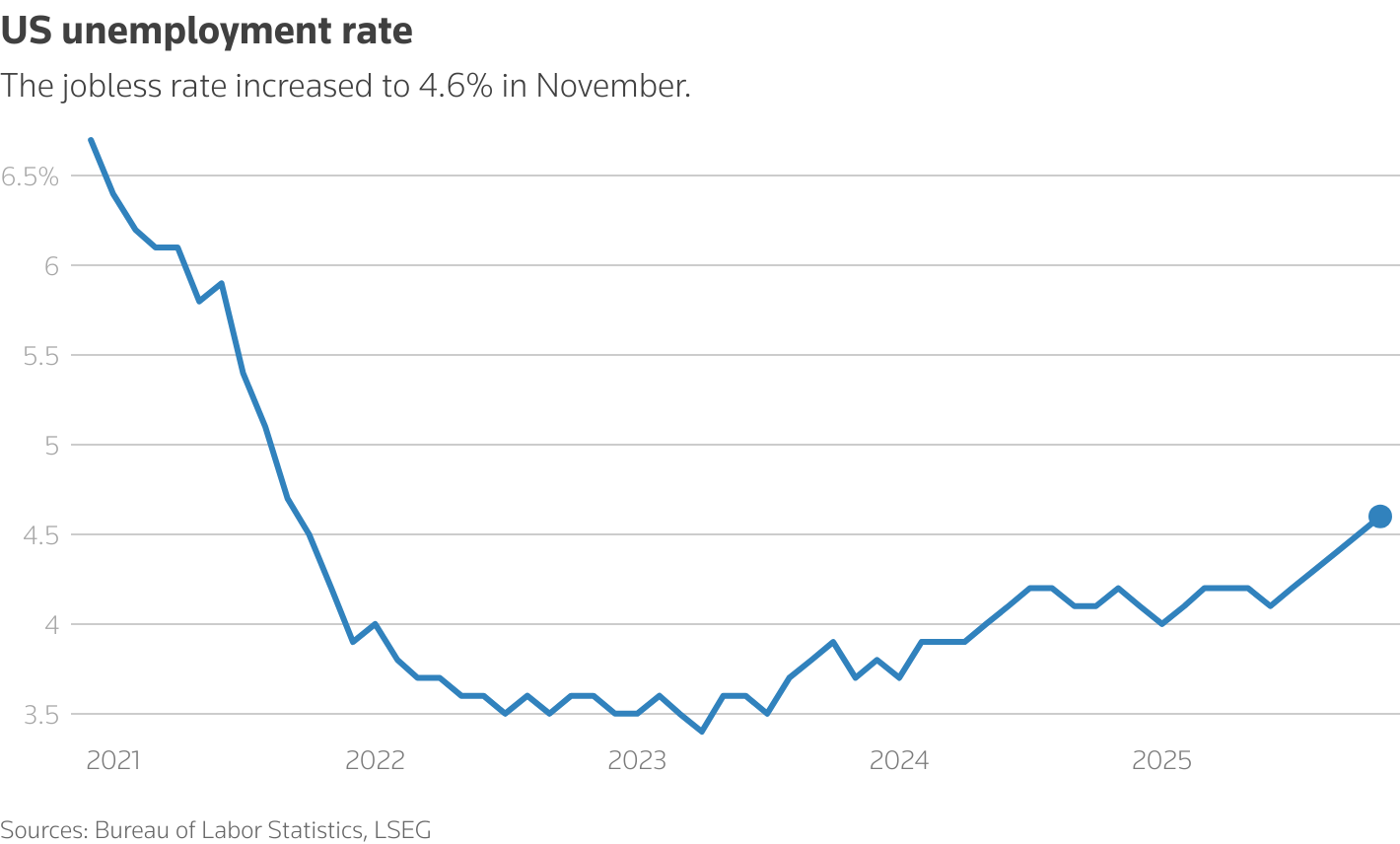
- Unemployment Unexpectedly Hit a Four-Year High: The November unemployment rate rose to 4.6%, its highest mark since September 2021 (up from 4.4% in September). However, this was heavily skewed by the government shutdown, which delayed household survey collections and dragged the response rate down to just 64%. These technical factors, alongside "rotation bias," pushed standard error rates above normal, meaning the reliability of this data should be taken with a grain of salt.
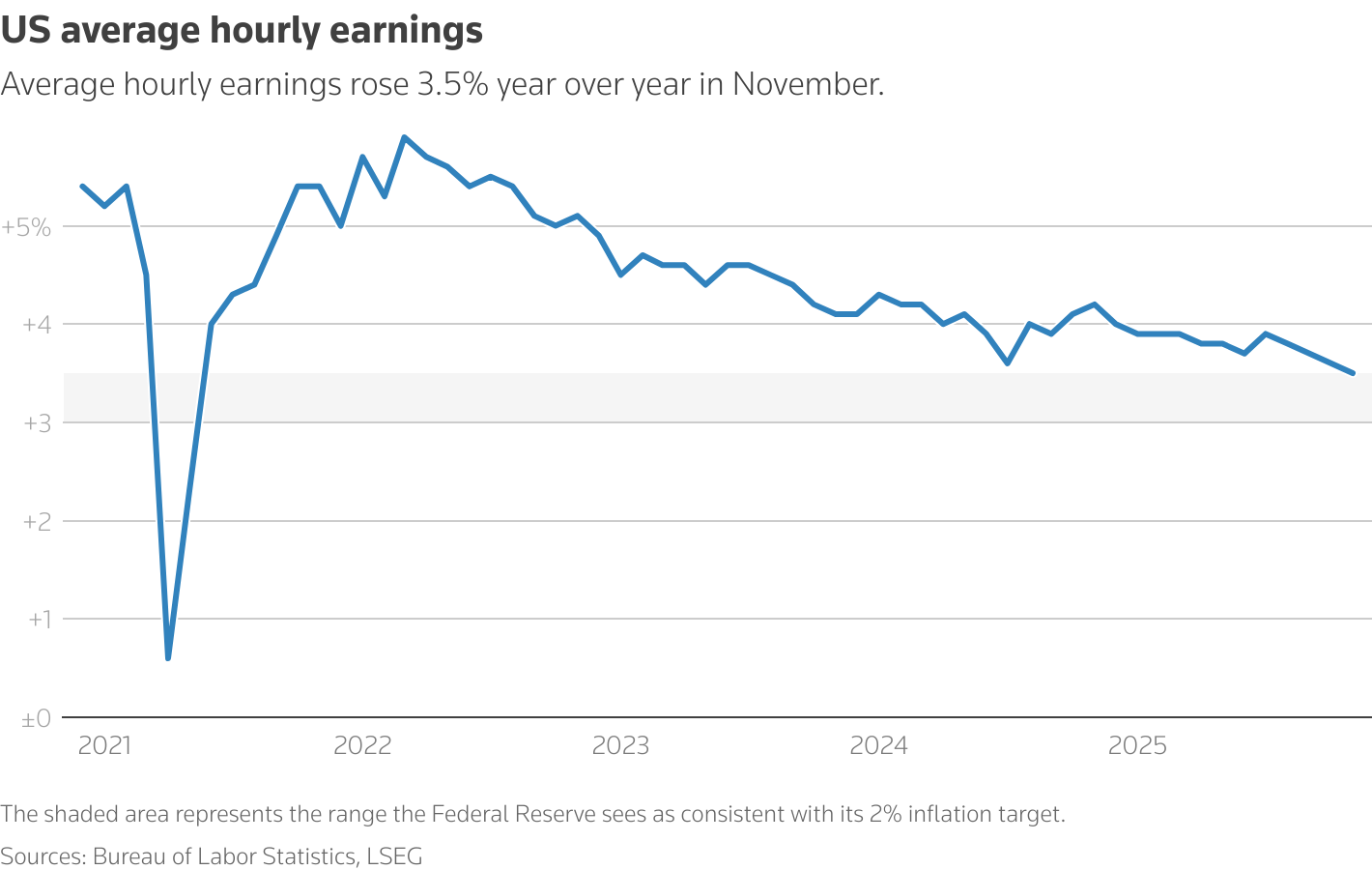
- Wage Growth Moderated Further: Average hourly earnings rose 3.5% year-over-year, marking the smallest increase since May 2021. Month-over-month growth was also marginal, showing that inflationary pressures continue to ease, which supports the Fed's path toward easing.
Overall, this delayed and distorted report reinforces the trend of a gradually cooling labor market. However, because the private sector remains relatively solid, there are no immediate signs of a recession.
II. Special Background: The Aftereffects of the Government Shutdown

This report was a combined release for October and November due to the 43-day government shutdown—the longest in US history. This resulted in a total lack of household survey data for October (a first since 1948) and severely disrupted data collection for November.
With the November household survey response rate sitting at just 64%, normal standards were missed, and errors were higher than usual. Economists generally advise focusing on private sector payrolls to strip away these shutdown distortions.
Furthermore, preliminary benchmark revisions show that job growth over the past 12 months was underreported by 911,000, a point Powell has repeatedly noted when referencing "significant downside risks" in the labor market.
III. Historical Trends and Structural Concerns
- Job Growth Has Scarcely Moved Since April: The +64,000 reading for November continues a sluggish streak, with the monthly average over the last few months tracking well below the levels seen in the first half of the year.
- Industry Disparities Broaden: Service sectors led the gains, spearheaded by healthcare (+4.6,000 across outpatient services, hospitals, and nursing facilities), followed by construction (+2.8,000) and social assistance (+1.8,000). On the flip side, transportation and warehousing shed 1.8,000 jobs, with couriers taking a noticeable hit, while leisure and hospitality dipped slightly. Federal government employment kept sliding, down 6,000 for the month, bringing total losses to 271,000 since the peak at the start of the year.
- Structural Pressures Remain Tough: Uncertainty surrounding Trump's tariff policies has driven up commodity prices and throttled consumer spending (with October retail sales coming in flat), keeping employers cautious about hiring. Additionally, the labor market is turning into a "demand-constrained" environment as AI hits entry-level roles and immigration slows, while the job openings-to-unemployed ratio has dropped to a low level.
IV. Institutional Actions and Immediate Market Reactions
Market reactions were split following the report's release. The US Dollar Index briefly slid to a two-month low, US Treasury yields dropped, and equity markets pulled back.
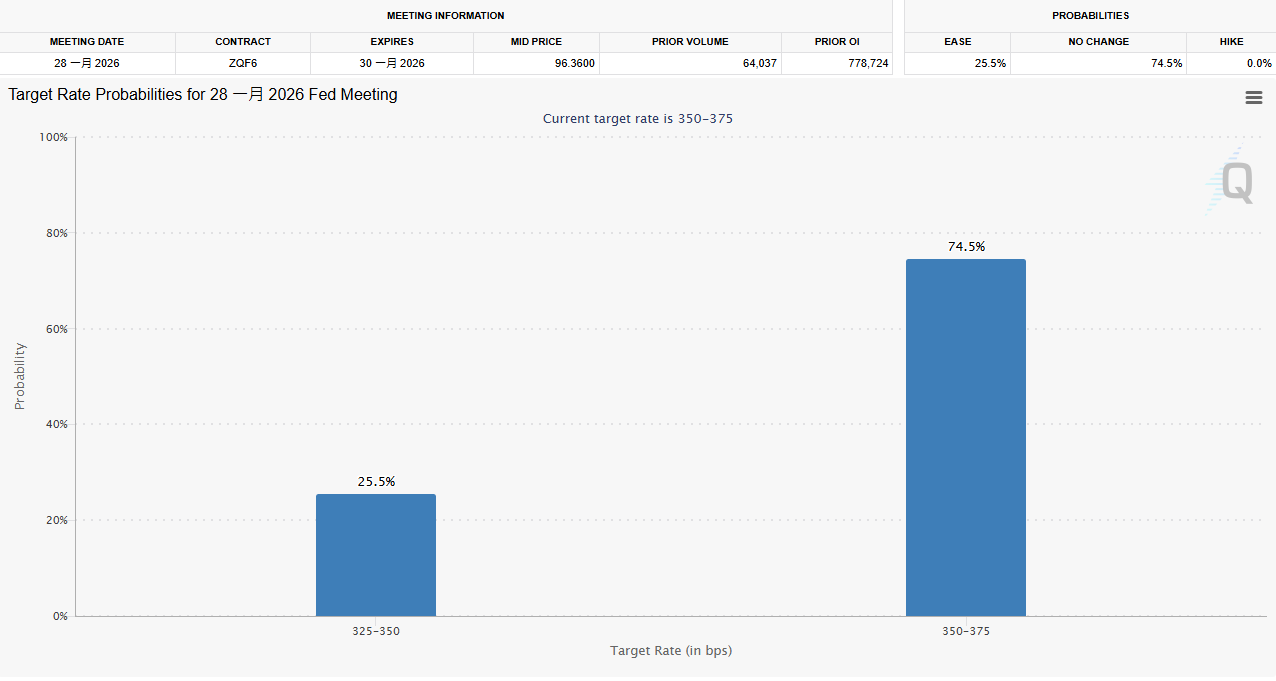
- The CME FedWatch Tool showed that the probability of a rate cut at the January meeting remained low at around 25%. The market anticipates roughly 50 to 60 basis points of total easing across 2026, though the Fed is expected to pause in the near term.
- Summary of Investment Bank Views:
- Kathy Bostjancic, Chief Economist at Nationwide: The private sector is sturdier, which backs the Fed pausing its rate-cut cycle for a while, though the unemployment rate figures need to be heavily discounted.
- Michael Feroli, Chief Economist at J.P. Morgan: Once you strip out the technical noise, the unemployment rate only ticked up slightly, making the overall report ambiguous.
- Stephen Stanley, Chief Economist at Santander: Government workers in the household survey plunged by 503,000, so expect the December unemployment rate to bounce back down.
Broadly speaking, hawks focused on the job rebound, while doves highlighted the new high in the unemployment rate, slowing wages, and technical distortions. This has widened internal divisions at the Fed, where Powell has already hinted at downside risks for employment.
V. Gold Price Forecast After This NFP Release
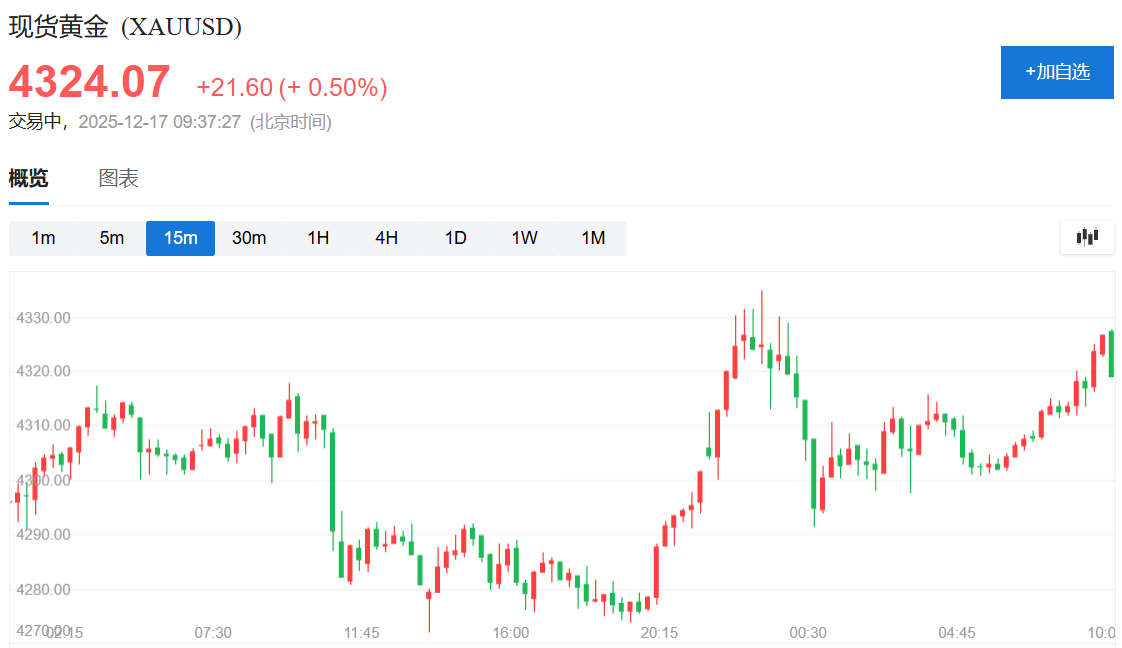
The November NFP sparked heavy volatility for gold at high levels. In the Asian session on December 17, spot gold edged upward to $4,324.07 per ounce, successfully holding above the $4,300 handle in the short term.
- Short-Term Drivers: The job rebound initially weighed on rate-cut expectations. However, the rise in unemployment to 4.6% paired with technical noise reignited dovish hopes, pulling the US Dollar Index below 98 and sinking Treasury yields, which helped gold rally and stabilize above $4,300 late in the session.
- Medium- to Long-Term Logic: Gold's three core pillars—a low interest rate environment, central bank purchasing, and geopolitical uncertainties (such as ongoing tensions in the Middle East and back-and-forth updates in the Russia-Ukraine conflict)—remain rock solid. Additionally, Trump's trade policies are magnifying economic uncertainty. Market institutions project that if gold finishes 2025 above $4,400, the target for 2026 could extend to $4,859–$5,590.
Conclusion
The November NFP report serves as the first "recovery" data set following the government shutdown. Though packed with statistical noise, it underscores a labor market characterized by a gentle slowdown and structural splits. For the Fed, private payroll resilience offers justification to pause rate cuts in January, yet a climbing unemployment rate and cooling wages will keep giving the doves plenty of leverage. Gold maintains its structural bull market foundation amid the volatility, waiting for the dual drivers of inflation and geopolitics to become clearer in the first half of 2026.