

I. Introduction: A Collision Between Slowing Data and a Policy Wait-and-See Period
The first non-farm payrolls (NFP) report of 2026, covering December data, will be released on Friday, January 9. This report serves as a critical window to evaluate economic momentum at the end of 2025 and will directly shape market expectations for the Federal Reserve's monetary policy meeting in late January.
Currently, the market is in a delicate collision phase between slowing economic data and a policy wait-and-see attitude. Economists expect December job growth to slow further to 57,000, while the unemployment rate is projected to tick down slightly to 4.5% from its four-year high of 4.6%.

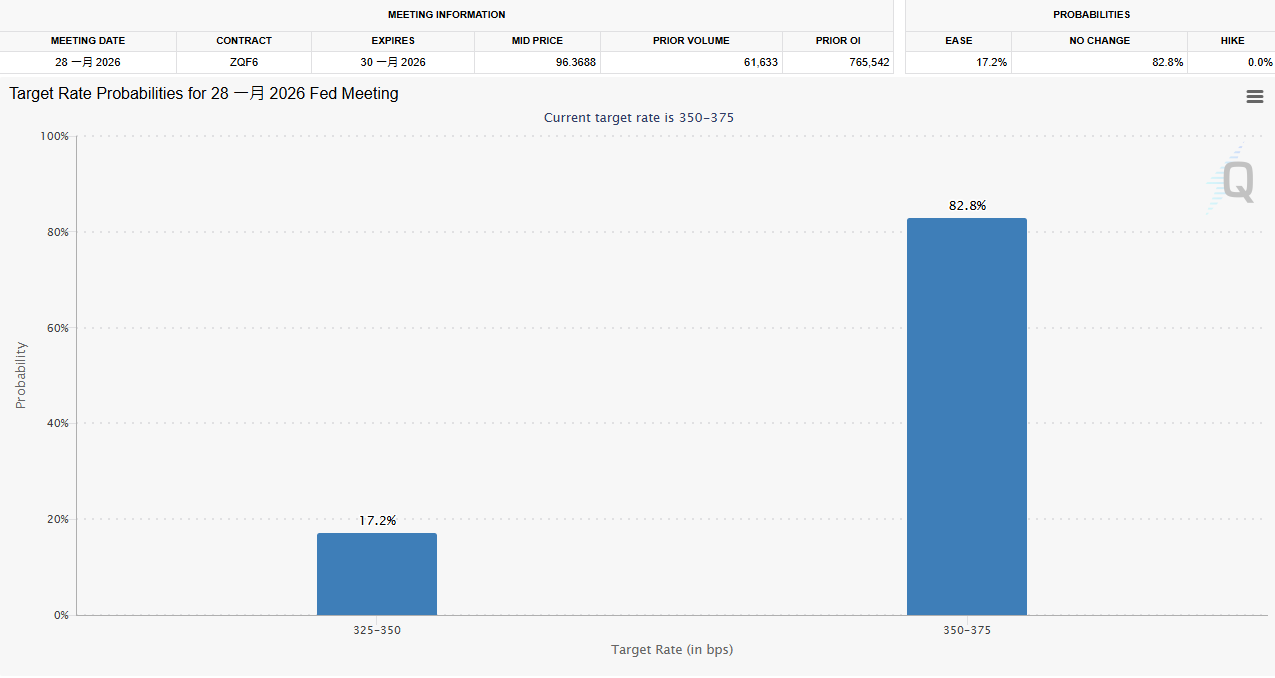
However, the market is currently pricing in a staggering 82.8% probability that the Fed will hold rates steady at its January meeting. The core conflict of this report lies in a key question: if the data arrives as soft as expected, will it reinforce the narrative of an orderly economic cooling, or will it spark deeper anxieties about recession risks?
At the same time, the report will provide the first clear look at the true resilience of the labor market under the weight of the year-end holiday season, alongside lingering geopolitical and economic uncertainties.
II. Preview and Interpretation of Core Employment Indicators
- ADP Private Payrolls Report (January 7): As a major leading indicator for the official NFP, the market expects December ADP private sector employment to increase by 4.7,000. A reading significantly below this figure could provide an early hint of NFP weakness, amplifying market volatility.

- Weekly Unemployment Claims (January 8): Close attention should be paid to trends in initial and continuing jobless claims, with initial claims expected to bounce back to 205,000. These are high-frequency indicators for judging how fast the labor market is loosening.

- Challenger Job Cuts Report (January 8): This report offers insight into corporate layoff plans, particularly in sensitive industries like tech and finance. In November 2025, companies announced 71,321 job cuts, marking the highest figure for that specific month since 2022.

Core December NFP Forecasts:
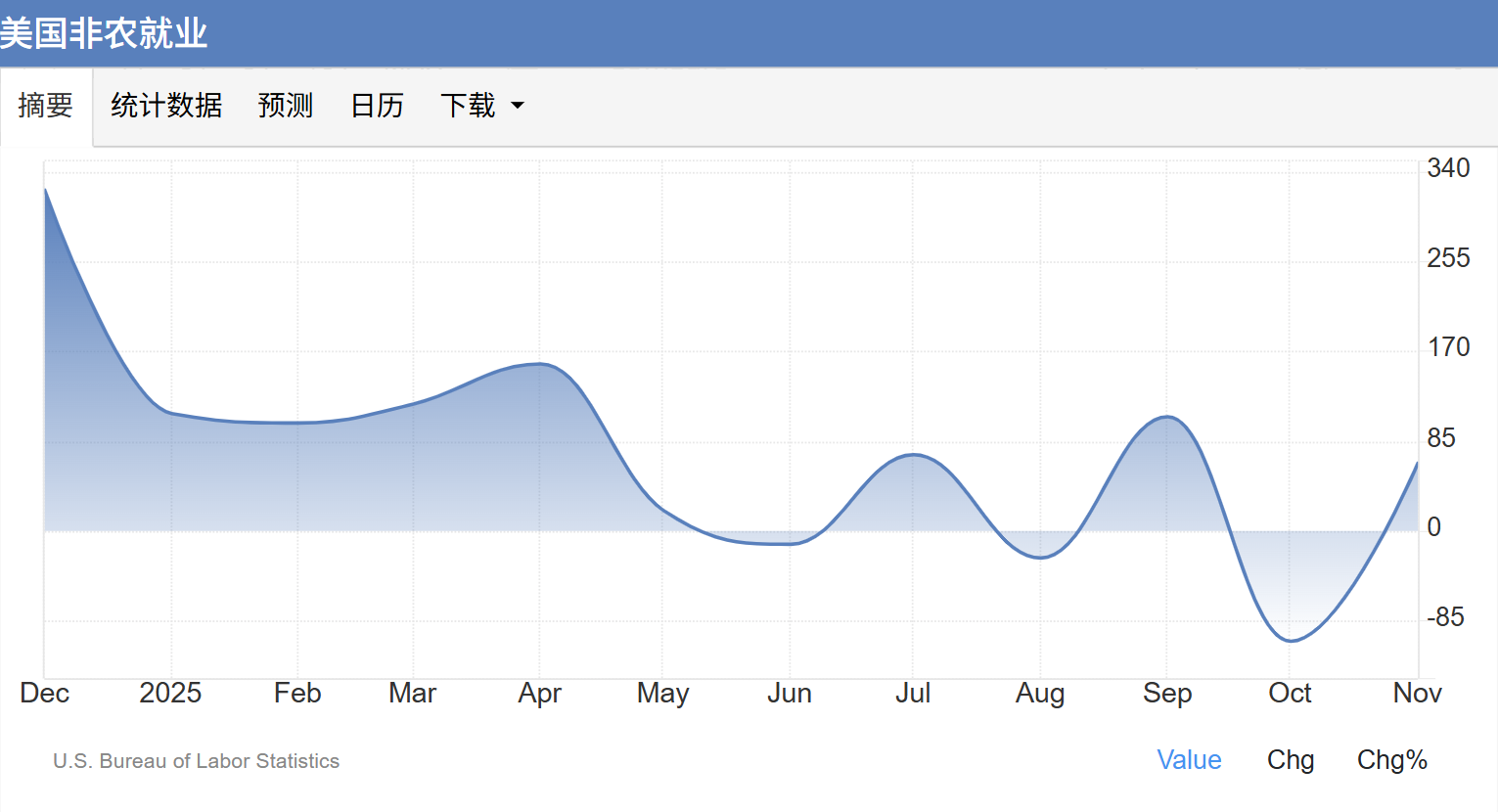
- Job Growth: Expected at 55,000 (compared to the previous November reading of 64,000). While healthcare and construction added jobs in November, the federal government continued to trim positions. Consecutive monthly readings below 100,000 would confirm that job growth has shifted into low gear.
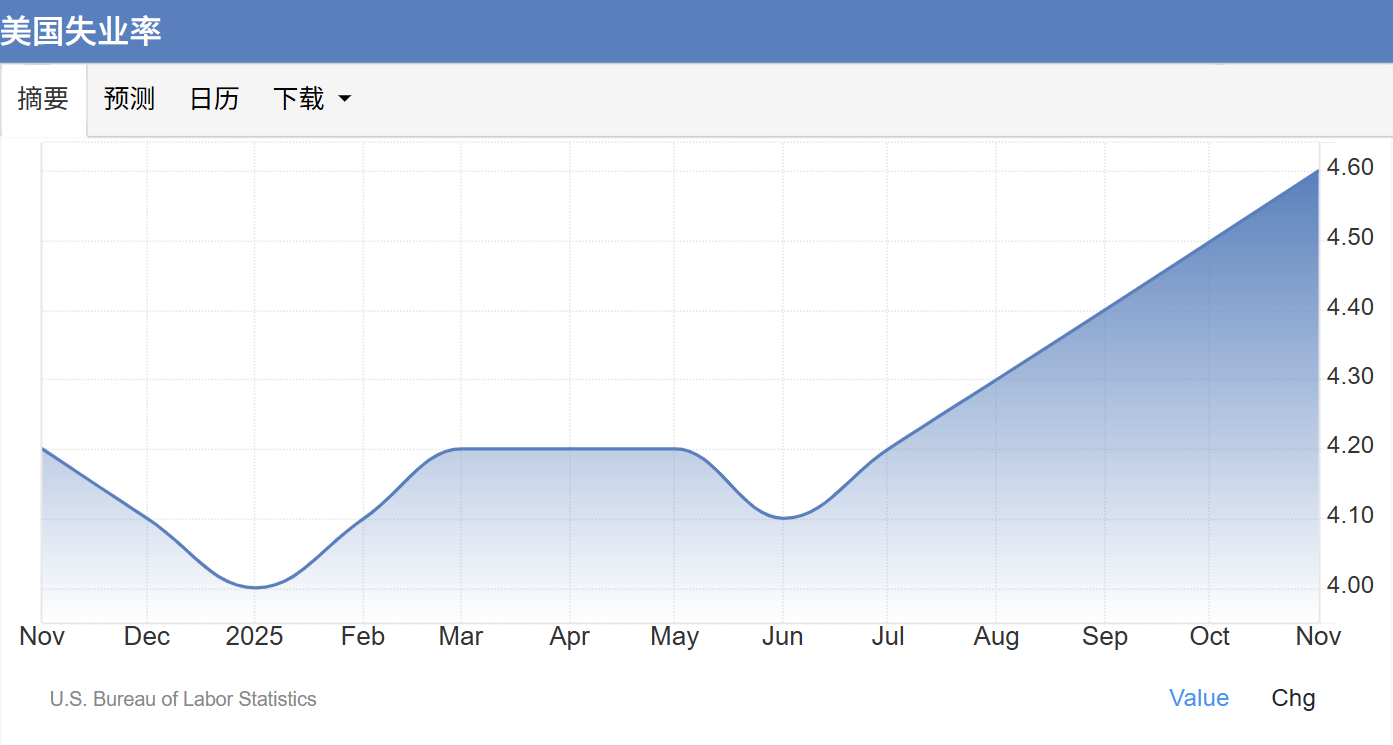
- Unemployment Rate: Expected at 4.5% (compared to the previous November reading of 4.6%). Even with a slight projected pullback, the US unemployment rate jumped from 4.3% in August to 4.6% in November, overshooting market expectations of 4.4% and hitting its highest level since September 2021.
III. Historical Data Review: Trends in the Second Half of 2025
Looking back at the second half of 2025, non-farm payroll growth followed a volatile downward trajectory, slipping from double-digit monthly gains mid-year toward single-digit increases by year-end. The jump in the unemployment rate to a four-year high of 4.6% in November stands out as a pivotal turning signal. If this cooling trend is extended or confirmed in the December report, it will paint a clear picture of a noticeably slowing job market, providing solid data support for a shift in Fed policy.
IV. Market Expectations and Core Areas of Focus
Despite the soft data forecasts, the market currently leans toward believing that the Fed will remain patient. The core areas of focus include:
- The nature of the soft data: Is it a gentle, broad-based slowdown across industries, or a sharp contraction in specific sectors? The industry breakdown data will be crucial.
- Shifts in the participation rate: Is the minor drop in unemployment due to more people finding work, or because workers are leaving the labor force entirely? The labor force participation rate will reveal the truth.
- Hints regarding inflation: Is wage growth continuing to moderate gently, or is it proving sticky? This directly impacts the core inflation outlook.
V. Other Key Events and Market Themes for the Week
This week features a classic alignment of a heavy data calendar and major political events.
- The Suspense Over the Fed Chair Nomination: President Trump is expected to announce potential nominee choices in early January to succeed Chair Powell, whose term concludes in May. The impact of this announcement could easily overshadow a single month of economic data, as it directly affects the Fed's policy independence, philosophical leanings, and market credibility for years to come. Any rumors surrounding the nomination could spark violent market swings.
- Services and Consumer Confidence Data: The ISM Services PMI (January 7) and the University of Michigan Consumer Sentiment Index (January 9) will provide secondary verification of economic growth engines and domestic demand sentiment.
Conclusion
The opening non-farm payrolls report of 2026 carries significance that stretches far beyond a single monthly employment figure. It lands against a highly complex backdrop marked by visible signs of slowing economic growth, a Fed policy observation window, and massive political uncertainty involving the transition of Federal Reserve leadership.
The market will use this report to calibrate its assessment of a US economic soft landing and re-evaluate the risk premium born from the intersection of Fed policy paths and political variables. Traders need to prepare for two-way volatility driven by both the data itself and event-driven risks like the Fed nomination.