

I. NFP Summary: The Paradox of Stagnant Growth and Falling Unemployment
The US December non-farm payrolls data continued to show a contradictory pattern of "low growth and low unemployment," as the labor market got stuck in a structural deadlock of "low hiring and low firing."
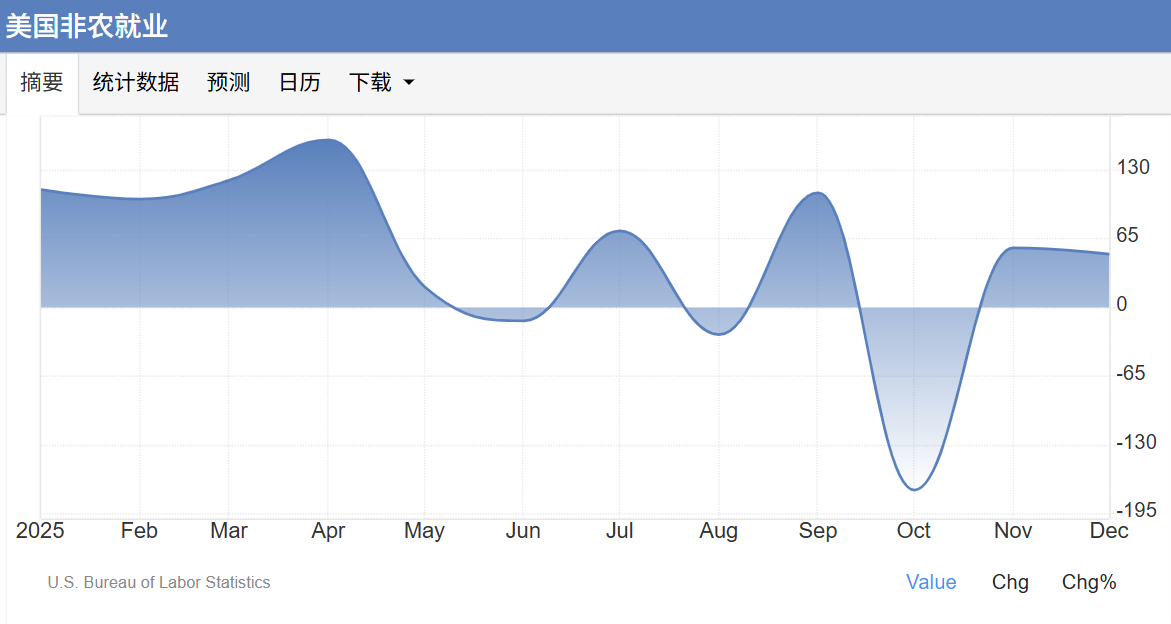
- Job Growth Kept Flirting with Weakness: December non-farm payrolls increased by 50,000, missing the market expectation of 60,000. With the previous month's figure revised down to 56,000, job growth has now spent several consecutive months tracking well below its long-term trend.
- Heavy Downward Revision to Previous Data: October's job loss was revised even lower from -105,000 to -173,000, marking the biggest single-month drop in nearly five years and reflecting the deepening blow of government layoffs.
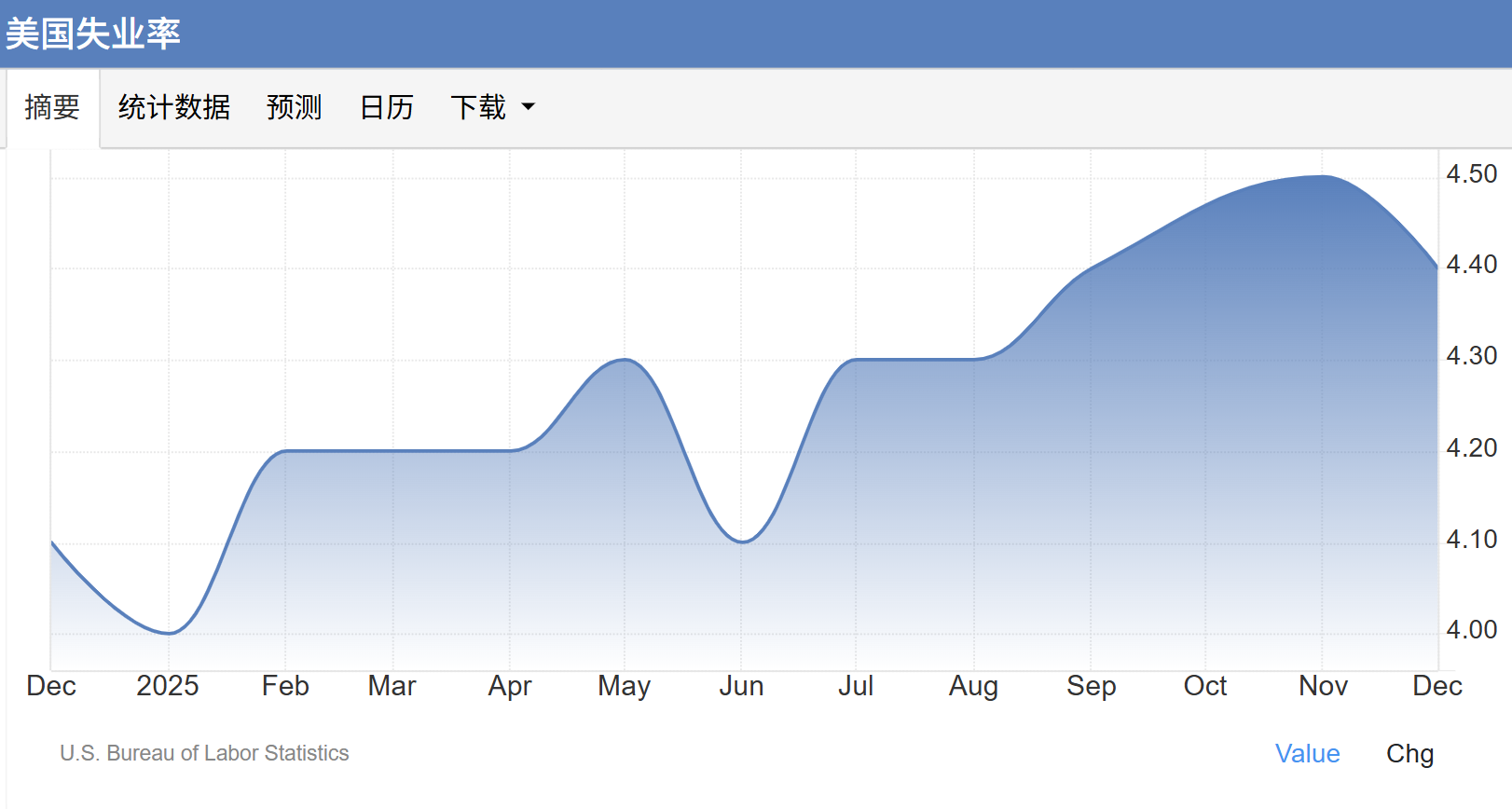
- Unemployment Rate Unexpectedly Edged Down: The unemployment rate fell from 11%’s 4.5% to 4.4%, coming in below the expected 4.5%. However, this drop was primarily driven by a pullback in the labor force participation rate rather than strong employment.
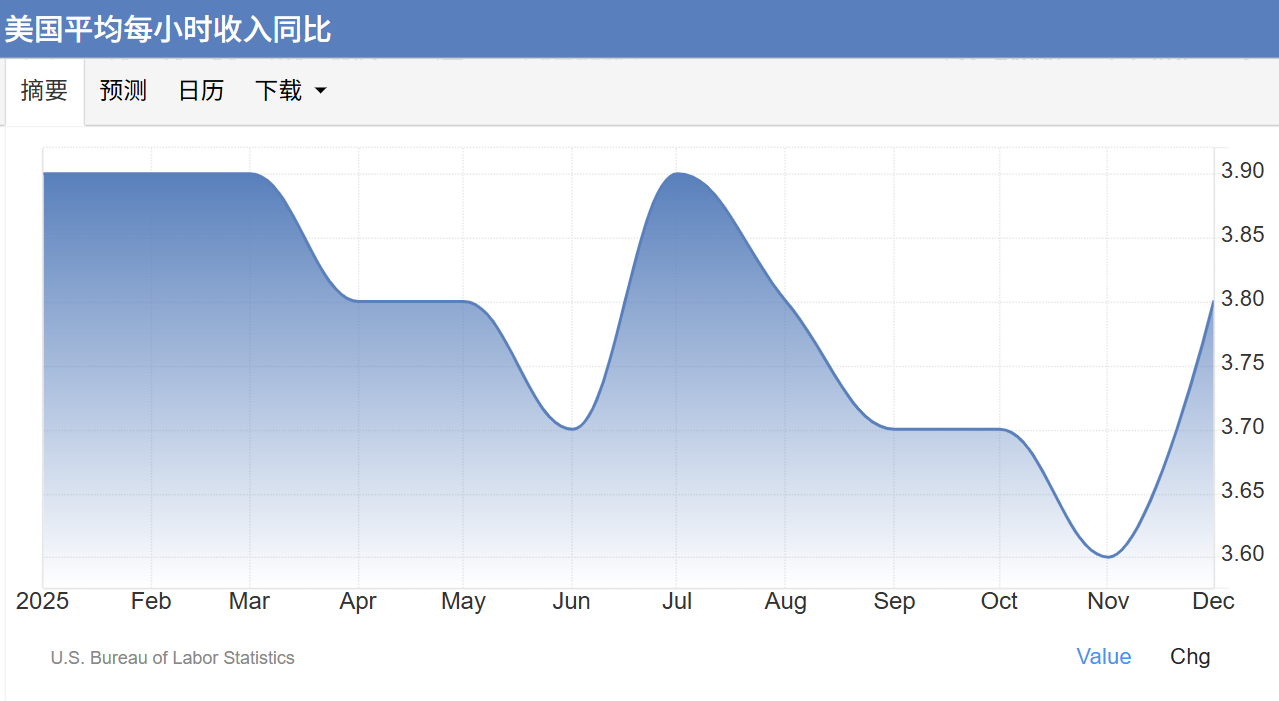
- Wage Growth Rebounded: Average hourly earnings accelerated to 3.8% year-over-year, up from November's 3.6%, highlighting labor shortage pressures in certain sectors.
II. Structural Factors Dominated the Market
- Dual Pressures from Policy and Tech: Trump’s trade and immigration policies, combined with a wave of corporate AI investments, jointly throttled hiring demand, sketching an economic picture of "jobless expansion."
- Upcoming Adjustments to Statistical Methods: The Bureau of Labor Statistics (BLS) will adjust its "birth-death model" starting in January and plans to release final benchmark revisions in February, which are expected to heavily downward-revise job growth for 2024–2025.
- Annual Revisions to the Household Survey: November's unemployment rate was revised down from 4.6% to 4.5%, showing that the rise in the unemployment rate during the first half of 2025 was wider than initially reported—meaning labor market softening started earlier than expected.
III. Historical Trends and Structural Concerns
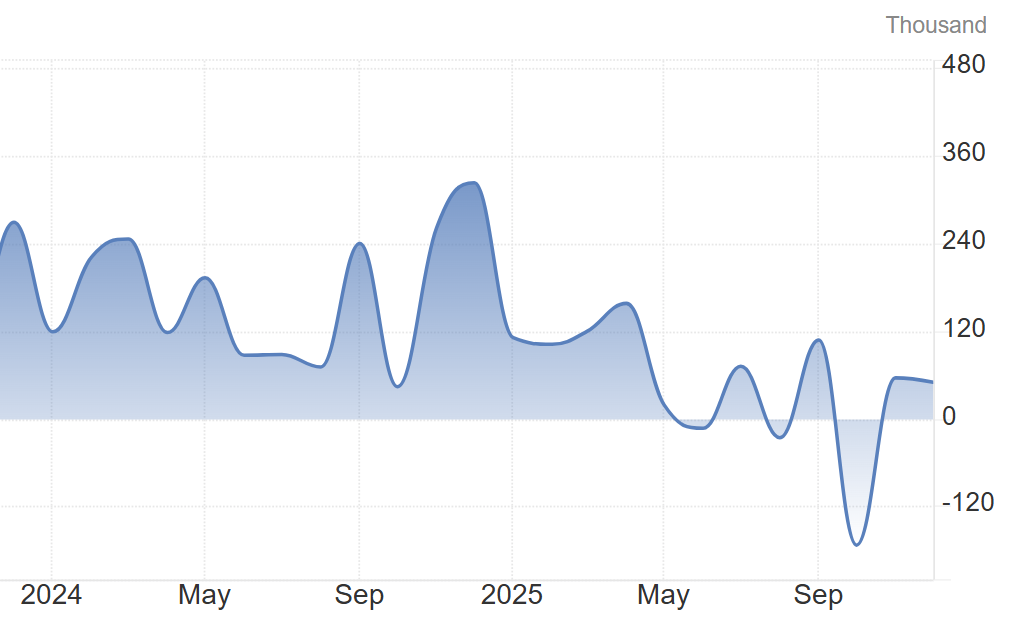
- Annual Job Growth Suffered a Cliff-Like Drop: For the full year of 2025, total job growth landed at just 584,000, averaging a meager 49,000 per month—less than a third of 2024's monthly average of 168,000.
- The Breadth of Sector Growth Narrowed: The percentage of industries reporting job growth dropped from 55.6% to 50.8%, with gains heavily concentrated in a handful of service sectors like food services (+27,000) and healthcare (+21,000)
- Cyclical Sectors Continued to Shrink: Manufacturing (-8,000), construction (-11,000), and retail (-25,000) all shed positions, highlighting a lack of internal economic momentum.
- Long-Term Unemployment Began Bubbling Up: The median duration of unemployment rose to 11.4 weeks, a four-year high. This increase in long-term unemployment indicates declining labor matching efficiency.
IV. Market and Institutional Reactions
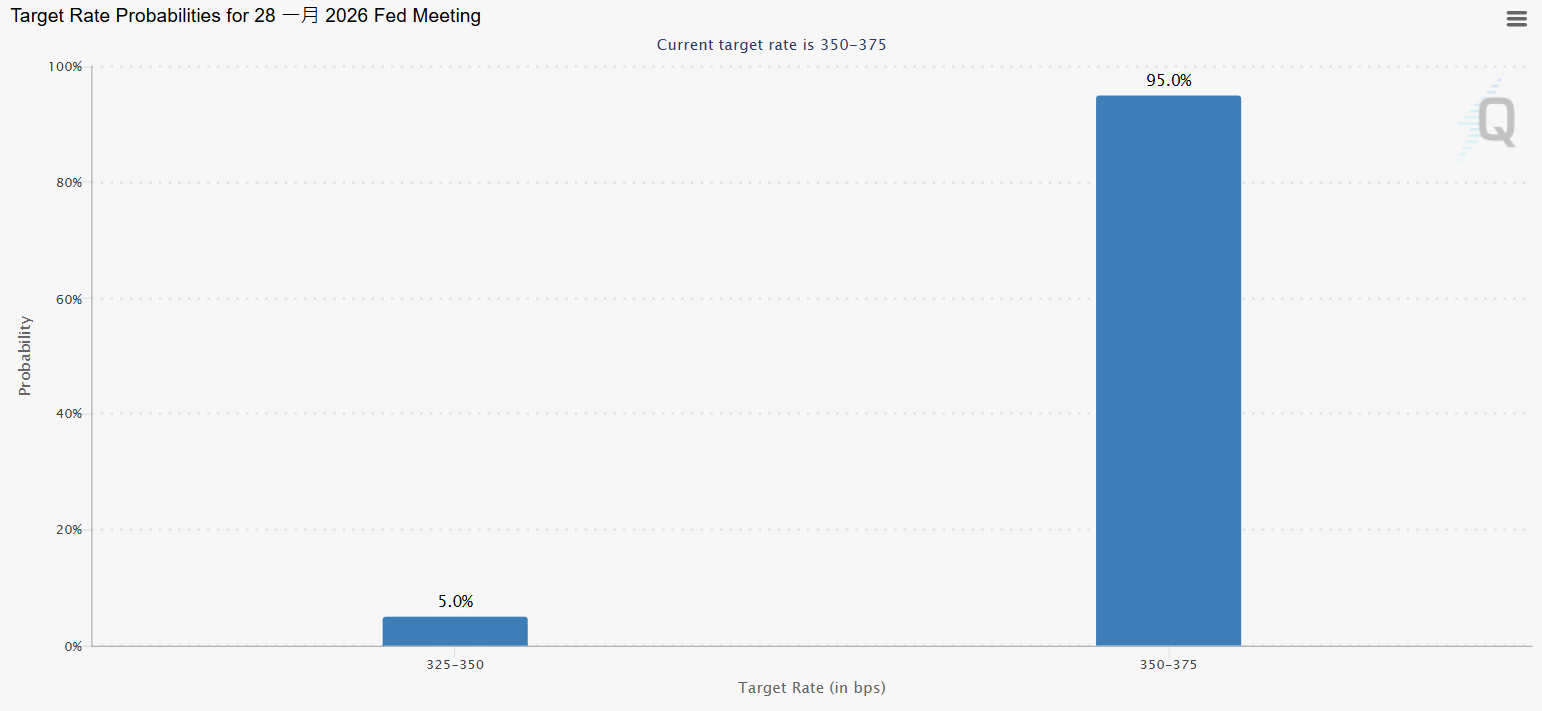
- Rate Cut Expectations Were Pushed Back Further: The FedWatch Tool showed the probability of a January rate cut plunged to under 5%. The market now expects the Fed to hold rates steady at its January meeting, and the odds of rate cuts in March and April were also shaved down, signaling that gold prices have uncoupled from rate-cut expectations.
- Institutional Views Focused on Structural Weakness:
- Fitch Ratings: The drop in the unemployment rate eases the sense of urgency for the Fed, but the "speed of stagnation" in job growth cannot be ignored.
- TD Securities: Expects the unemployment rate to keep climbing in the first quarter of 2026, reflecting the persistence of the "low hiring, low firing" pattern.
- EY-Parthenon: Policy uncertainty and AI investments are forcing companies to prioritize cost control, keeping hiring appetite consistently depressed.
- Diverging Asset Price Reactions: US stocks rose and the US dollar strengthened, but long-end US Treasury yields pulled back, reflecting the market's complex pricing of a "slowing but not collapsing" growth narrative.
V. Gold Price Forecast: The Safe-Haven Narrative Trumps Rate-Cut Logic
- Short-Term Catalysts: The soft employment data fueled safe-haven sentiment, sending gold prices up nearly 4% for the week, briefly breaking past $4,600 to notch another all-time high.
- A Fundamental Shift in the Medium-Term Logic:
- De-dollarization and Geopolitics: Multiple compounding crises—including unrest in Iran, sovereignty disputes over Greenland, and the flip-flopping Russia-Ukraine conflict—have chipped away at the US dollar credit system, driving central banks and institutions to allocate into gold.
- Fed Policy Drops to Secondary Importance: The delay in rate-cut expectations did nothing to stop gold's rally, showing that gold's pricing logic has completely shifted from being "interest-rate driven" to acting as a "safe haven against a changing global order."
- Technical Breakout Extends Strength: Gold has established a firm footing above $4,550, with the monthly chart exhibiting an accelerating upward pattern.
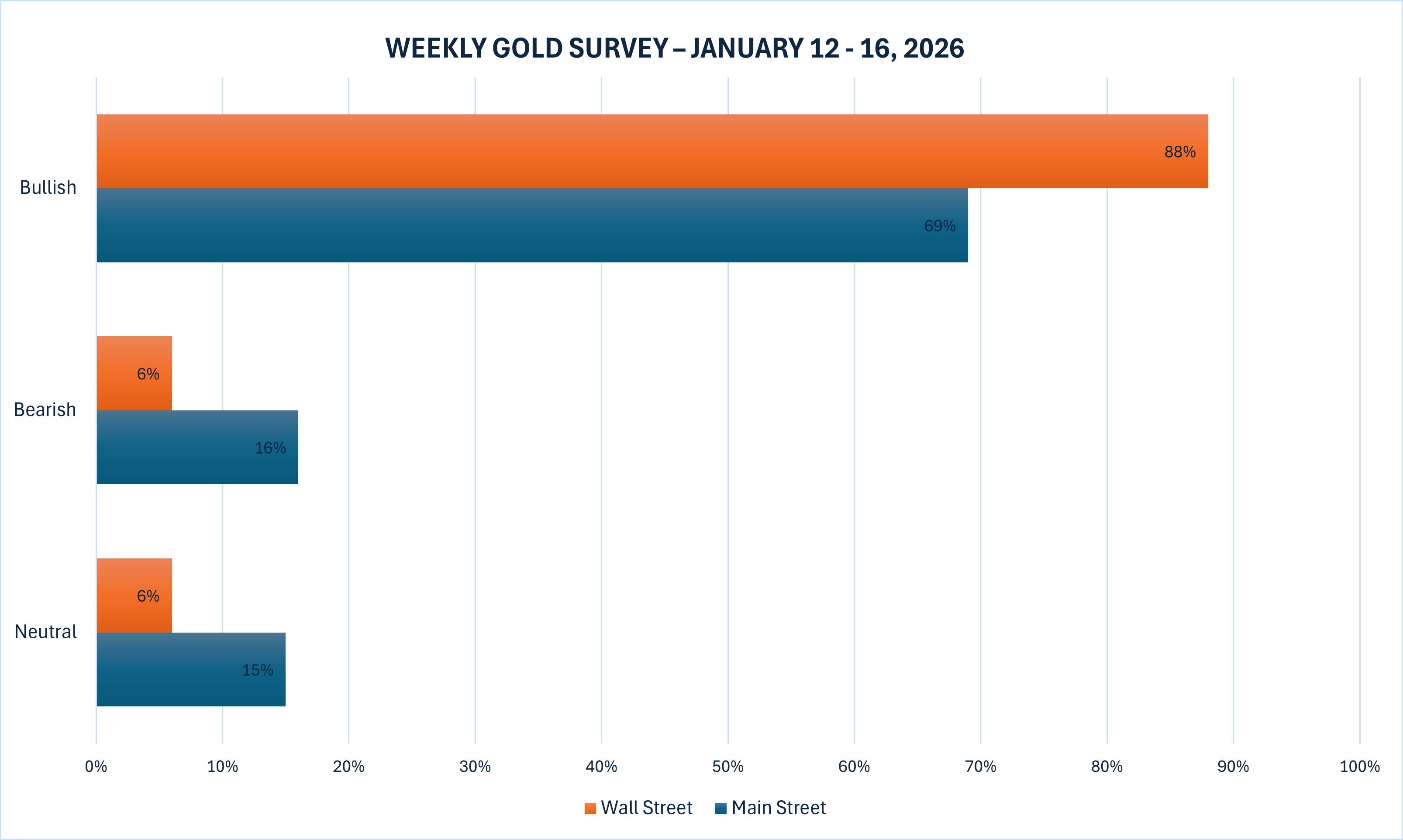
- Target Outlook: In Kitco's weekly gold survey, Wall Street experts were overwhelmingly bullish on gold's near-term prospects. 88% expect gold prices to move higher this week, quickly challenging the record high set last December. Retail investors' bullish sentiment toward gold also hovered near recent highs, with 69% expecting prices to continue climbing this week. Institutions like Metals Focus have publicly forecast gold to breach $5,000 in 2026, pushing the market into a "conviction-driven" phase.
VI. Conclusion: Stagnant Jobs vs. Running Gold
The December NFP report confirms that the US labor market has entered a "structural low-speed" phase—where policy uncertainty, AI substitution, and demographic supply constraints are weighing heavily on hiring flexibility. For the Fed, the drop in unemployment combined with rebounding wages should support a pause on rate cuts in January, though weak job growth and worsening long-term unemployment remain underlying risks.
Meanwhile, the gold market has transcended the traditional macro trading framework to become a "physical credit hedge" against global order uncertainties. Investors are better off downplaying short-term non-farm payroll numbers. The main focus this week should be on US CPI data and geopolitical developments, as both are highly likely to jointly shape the next leg of gold's journey.