

Introduction: Employment Data Clouded by Multiple Uncertainties
The first non-farm payrolls (NFP) report of 2026, covering January data, will be released on Friday, February 6. It lands at a critical moment as global markets search for direction following early-year volatility.
While this report will offer the first glimpse into the US economy's opening momentum for the new year, interpreting it will be exceptionally complicated:
- Following the market close on February 2, the CME Group significantly raised margin requirements for precious metals, pushing gold from 6% to 8% and silver from 11% to 15%. Concurrently, the Shanghai Futures Exchange adjusted its daily price limit for silver to 17%. Historically, these types of forced deleveraging measures are accompanied by severe market volatility, amplifying liquidity risks before and after the NFP release.
- A packed schedule of central bank decisions: This week brings monetary policy decisions from the Bank of England and the European Central Bank (both expected to hold steady), alongside a potential rate hike from the Reserve Bank of Australia. These moves will interact in complex ways with expectations for Federal Reserve policy.
Against this backdrop, the January NFP is more than just an economic indicator; it serves as a major stress test for a market facing the triple pressures of data fog, policy pivots, and tightening liquidity.
Preview of Core Employment Indicators: Widely Diverging Expectations
1. Market Expectations Overview
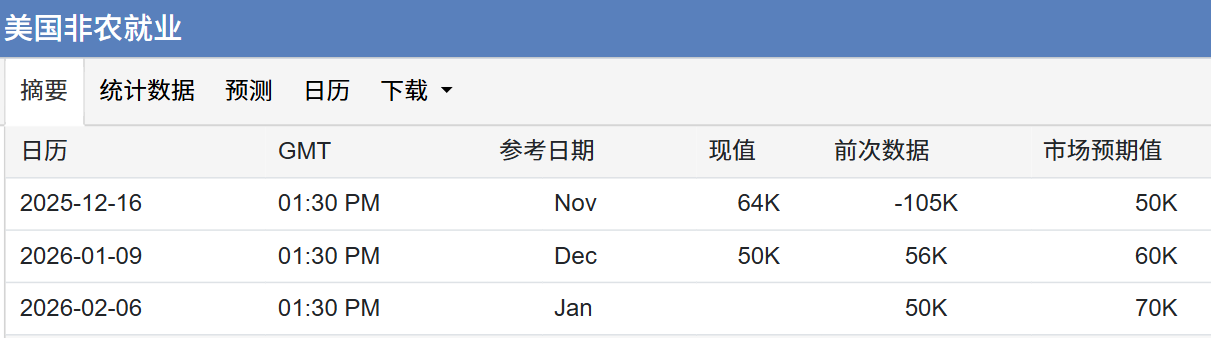
- Non-Farm Payrolls: The market consensus sits at +64,000 jobs, compared to a revised +50,000 in the prior month.
- Unemployment Rate: Projected to hold steady at 4.4%, relative to the previous month's revised reading of 4.5%.
- Wage Growth: Close attention should be paid to whether month-over-month average hourly earnings can maintain moderate growth (prior reading was 0.3%), which is critical to whether sticky inflation continues to ease.
2. Signals from Leading Indicators
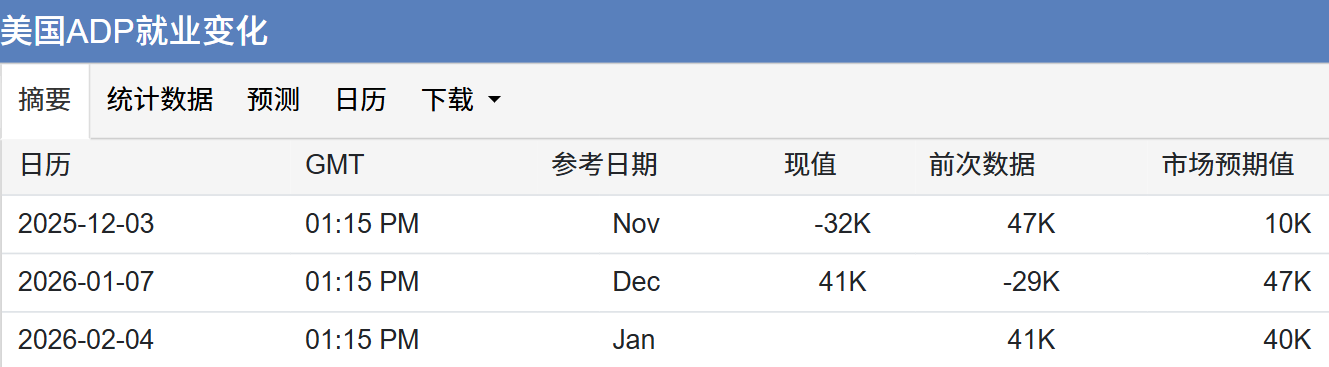
- ADP Employment Report (February 4): Expected to add 41,000 jobs. A major deviation from this number will give the market an early emotional jolt.
- JOLTS Job Openings (February 4): Expected to drop to one of its lowest levels since 2021, reflecting a continuous cooling in corporate hiring demand.
- Weekly Initial Jobless Claims: Serving as a high-frequency bellwether for judging how quickly the jobs market is loosening.
Historical Data Review: A Continuous Slowdown Trajectory
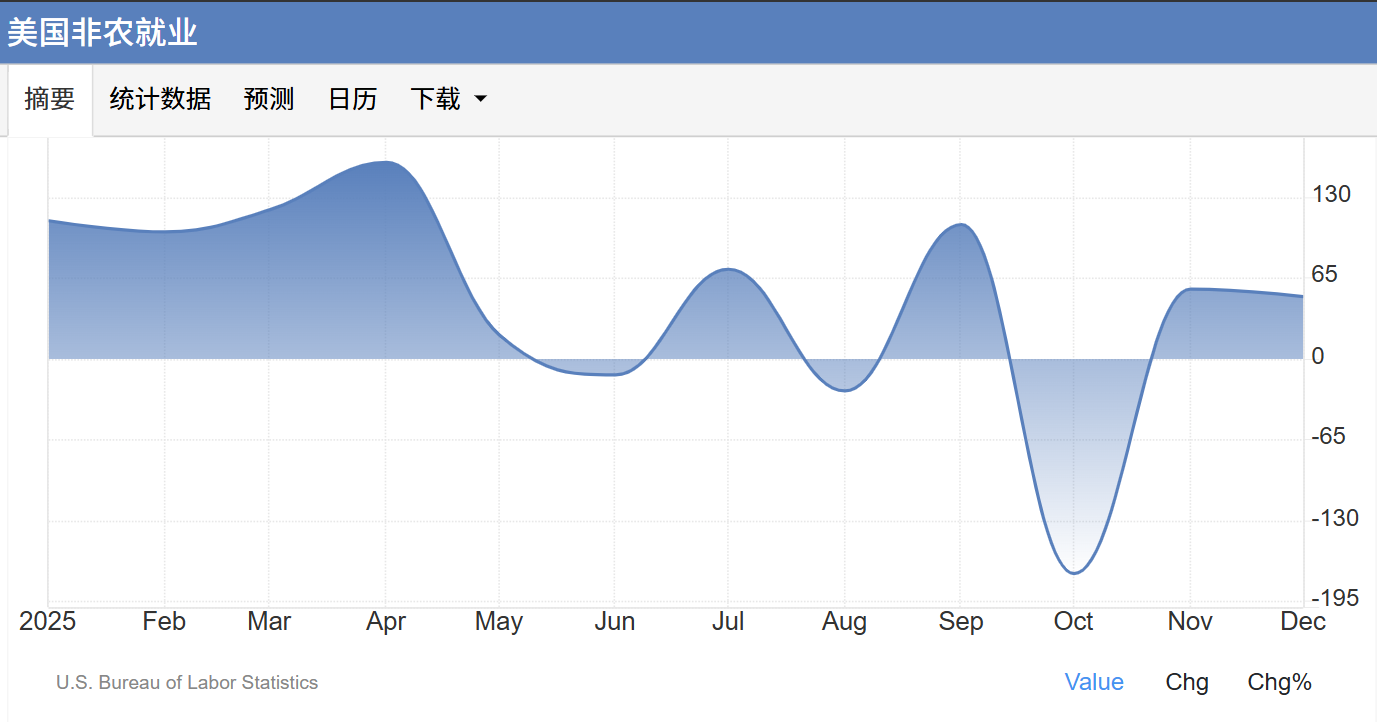
Data from the end of 2025 paints a clear picture of a cooling labor market:
- December Data: Payrolls grew by only 50,000 jobs (with the prior month revised to 56,000), missing the 60,000 forecast and marking the second straight month of growth below 100,000.
- Heavy Downward Revisions: October 2025 data was sharply revised downward to -173,000 jobs from an initial -105,000, while November was cut by 8,000. Following these revisions, the combined total for October and November came in 76,000 lower than originally reported.
- Full-Year Perspective: For the entirety of 2025, payroll employment grew by a mere 584,000 jobs, averaging just 49,000 per month. This is a dramatic slowdown compared to the 2 million jobs added in 2024.
Institutional Forecasts and Market Sentiment: A Clash of Views
Market expectations show a striking split:
- The Conservatives (Bloomberg Economics): Warn that the data could shock the market by softening to a mere 15,000 jobs, largely due to statistical adjustments and winter weather factors.
- The Consensus (Reuters Poll): Clusters within the 60,000 to 80,000 range, leaning toward the view that the economy remains resilient.
- ING (James Knightley): "The market remains cautious about the labor market and is currently pricing in only two 25-basis-point rate cuts this year."
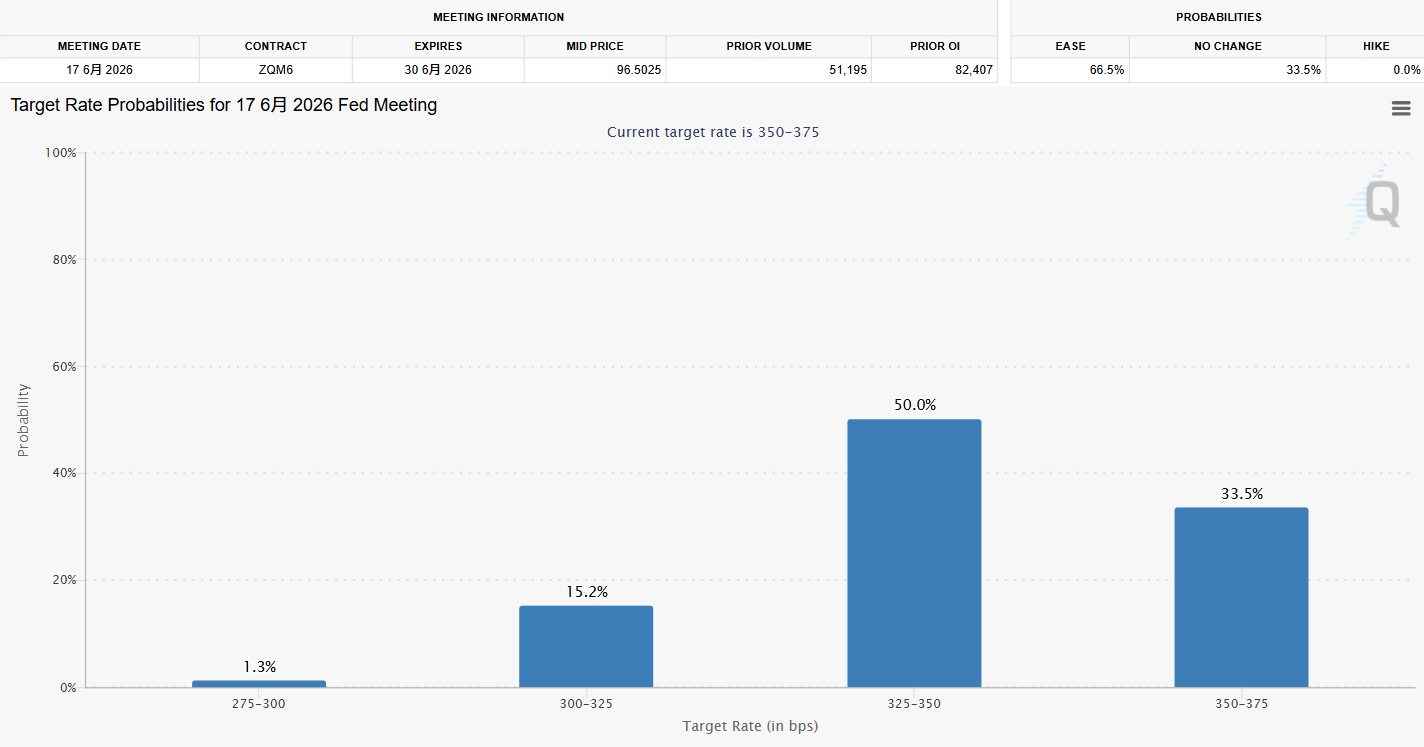
Rate Cut Expectations: According to the CME FedWatch Tool, the market currently expects the Fed to hold off on rate cuts until after June. However, any unexpected weakness in the jobs data could quickly turn those expectations on their head.
Other Key Events of the Week
Central Bank Super Thursday (February 5)
- European Central Bank (ECB): Expected to keep interest rates steady at 2.00%. The main focus will be on whether Christine Lagarde hints at or acknowledges the end of the tightening cycle.
- Bank of England (BoE): Expected to hold its policy rate at 3.75%. Although overall inflationary pressures are easing, sticky service-sector inflation remains the center of attention.
- Reserve Bank of Australia (RBA - February 3): Might deliver a 25-basis-point rate hike, but the market cares more about whether this marks the final hike of the cycle.
Conclusion
The arrival of the January 2026 NFP report coincides with a complex overlapping period for the market: a data revision phase, a policy observation window, and a liquidity adjustment cycle.
- The importance of the data itself is magnifying: Due to previous data gaps, the market is relying far more heavily on this "clean" report than usual.
- The trading environment is growing more complex: The combination of margin hikes and a cluster of global central bank decisions has significantly amplified event risk.
- Policy expectations are highly sensitive: Any surprise in the data could swiftly reset how the market prices the policy paths of the Fed and other major central banks worldwide.
The January NFP will serve as the first major signpost, guiding the market through a dense fog as it searches for a new equilibrium.