

I. Introduction: The Gap Between Stock Market Performance and the Real Economy
On Friday, May 8, 2026, the US Department of Labor will release the April non-farm payrolls report. Ahead of the release, the current market environment presents two completely different pictures.
On one hand, fueled by the rapid growth of AI tech and strong corporate earnings from tech giants, US stock markets like the S&P 500 and the Nasdaq just recorded their biggest monthly gains in recent years. On the other hand, the real economy is under notable pressure. The conflict in the Middle East briefly pushed crude oil prices past $120 per barrel, and shipping bottlenecks have significantly driven up production and transportation costs for businesses.
At a time when inflationary pressures are running extremely high and the Federal Reserve has hinted it will not cut interest rates anytime soon, the April jobs data has become exceptionally important. It will help us verify if the US labor market is cooling down smoothly, which will directly impact the stock market's next move and corporate borrowing costs.
II. Core Employment Indicators Forecast: Expectations Point to a Noticeable Slowdown
Compared to last month, the market widely expects the labor market to cool down in April:
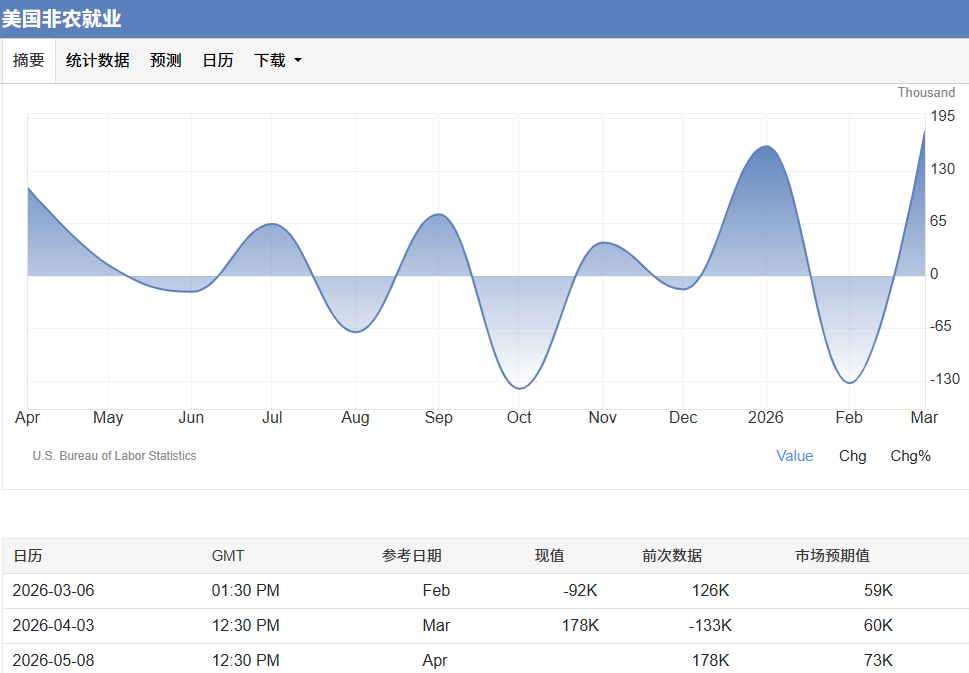
- Non-Farm Payrolls: Market expectations are divided. Economists surveyed by Reuters expect a median average of +60,000 jobs, while some economic models like Trading Economics project +95,000. Regardless of which forecast is closer, both point to a sharp slowdown from the 178,000 jobs added in March.
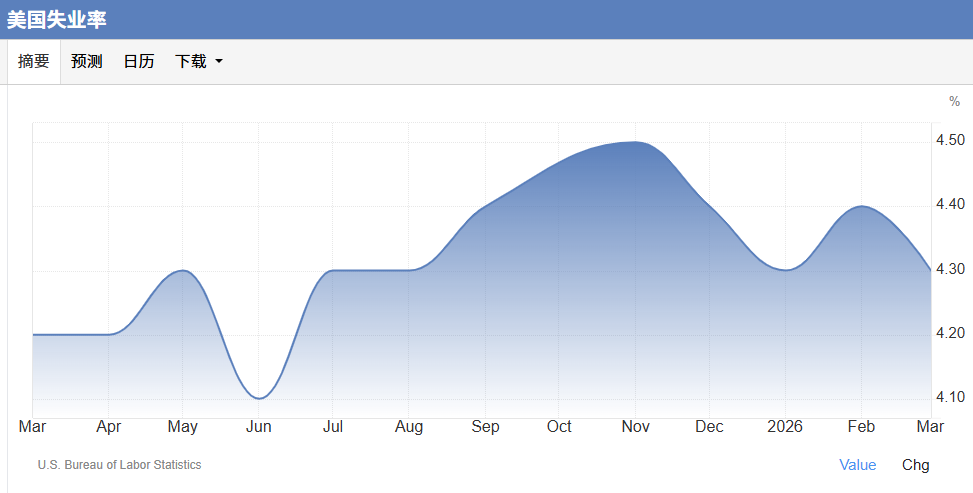
- Unemployment Rate: Expected to hold steady at a relatively high 4.3%, matching March's level.
- Leading Indicators Reference:
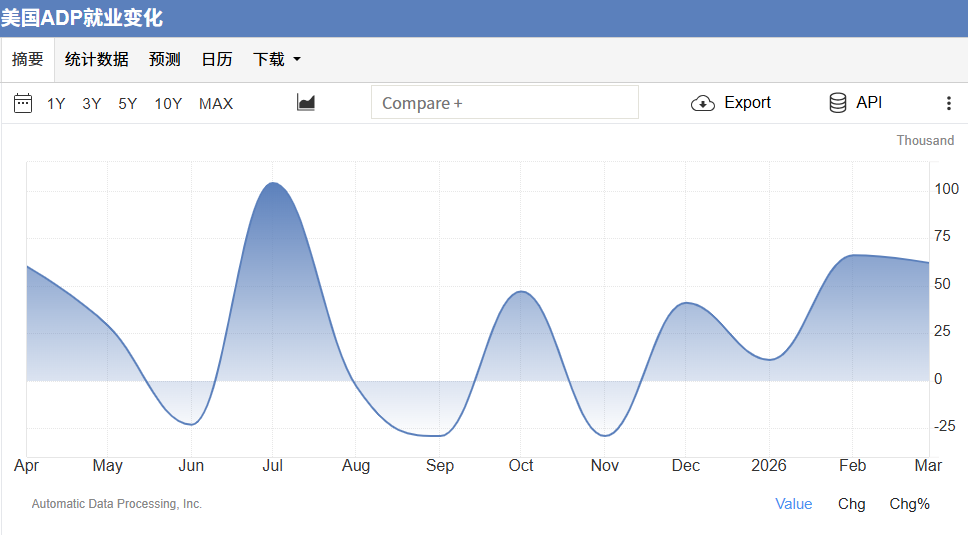
- ADP Private Payrolls (Released May 6): Expected to add 120,000 jobs in April, up from last month's 62,000. This forecast is significantly more optimistic than the main NFP data, so traders should watch out for a potential gap between the two reports.
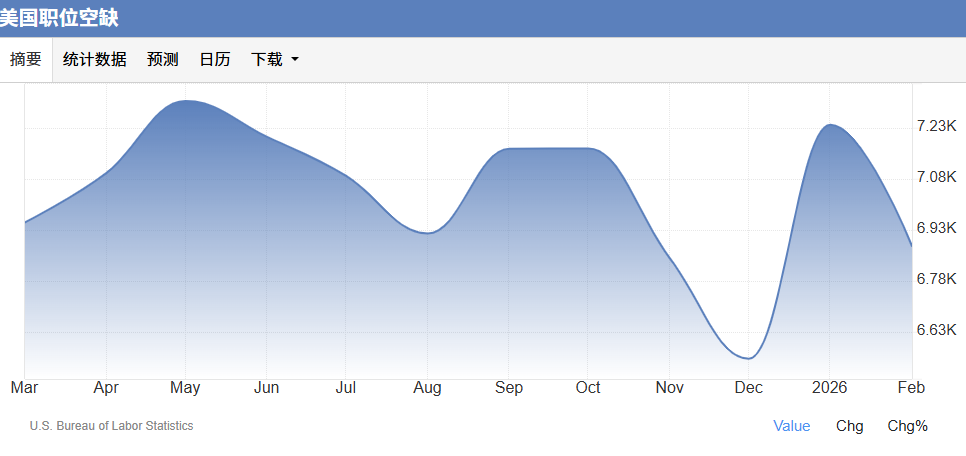
- JOLTS Job Openings (March Data): Expected to drop to 6.803 million, showing that corporate hiring demand is scaling back moderately.
III. The Truth Behind the Data: Stripping Away Strike Distortions and the State of Manufacturing
To understand why the April job growth forecast is dropping so sharply, we need to break down the special factors behind the March data and look at the reality facing specific sectors:
1. March Data Contained a Temporary Bump From Ending Strikes
March non-farm payrolls expanded by 178,000, which looked incredibly strong on the surface. However, healthcare alone accounted for 76,000 of those jobs. This was primarily because a massive wave of striking medical workers returned to their posts, making it a one-off data bounce. Once these temporary distortions fade in April, a fallback to a range between 60,000 and 90,000 jobs actually gives a truer reflection of a weaker labor market.
2. Traditional Manufacturing Faces a Double Whammy of Costs and Labor Pressures
Unlike the stellar profits seen in the tech sector, traditional manufacturing is hitting a wall. The latest ISM Manufacturing PMI report highlights that while the headline index remains in expansion territory at 52.7, factory employment has contracted for 15 consecutive months. Even more concerning, driven by geopolitics and tariffs, the raw materials prices paid index skyrocketed to a four-year high of 84.6. This dynamic of "shrinking hiring alongside surging costs" is a major underlying worry for economic fundamentals.
IV. The Fed's Stance and Market Impact: Rate Cut Expectations Evaporate
At the policy meeting that concluded this week, the Federal Reserve struck a distinctly hawkish tone. Not only did they hold interest rates steady, but three committee members explicitly voiced concerns about a potential inflation resurgence, suggesting current policies might not be restrictive enough to counter the risk. This means two things for the market:
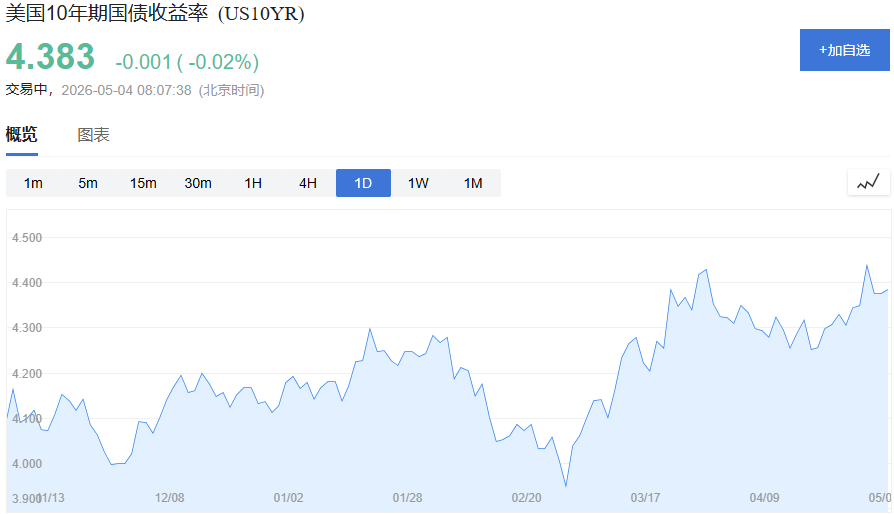
- Upward Pressure on Treasury Yields: Under the combined weight of high oil prices and inflation, the 10-year US Treasury yield—the benchmark for market borrowing costs—has breached 4.38%. If this week's NFP data, particularly wage growth, surprises to the upside, it could push yields even higher. This would increase borrowing costs for businesses and put pressure on currently rich stock market valuations.
- Delayed Rate Cut Timeline: As rising crude and freight costs inject fresh inflationary pressures, institutional analysts generally agree that the Fed has zero room to cut rates in the near term. The market has even begun pricing in the possibility of no rate cuts at all for the rest of the year.
V. Conclusion
The market's attitude toward the April NFP data is currently quite conflicted. If the numbers come in too hot, investors will worry the Fed might hike rates again to suppress inflation; if they come in too soft, it will trigger fears of the economy sliding into a recession. In the current high-oil environment, a moderate expansion of around 60,000 jobs might be the goldilocks zone the market prefers. To sum up, with corporate earnings growth colliding with persistent inflationary pressures, investors should remain objective and cautious, keeping a close eye on shifts in fundamental data.