

I. NFP Summary: A Complex Mix of Strong Growth and Structural Contraction
The US April non-farm payrolls data delivered a better-than-expected report card. Payroll employment figures far exceeded forecasts, and the unemployment rate held at a low level, reinforcing the narrative of economic resilience. However, peeling back the surface reveals a stark divergence between the household and establishment surveys. The labor force is shrinking at a relatively fast pace, laying bare a complex reality where the job market is not quite as booming as it looks on paper. Meanwhile, rising oil prices and persistent inflationary pressures are capping the Federal Reserve's near-term room to cut interest rates.
II. Core Data: Two Surveys Tell Different Stories
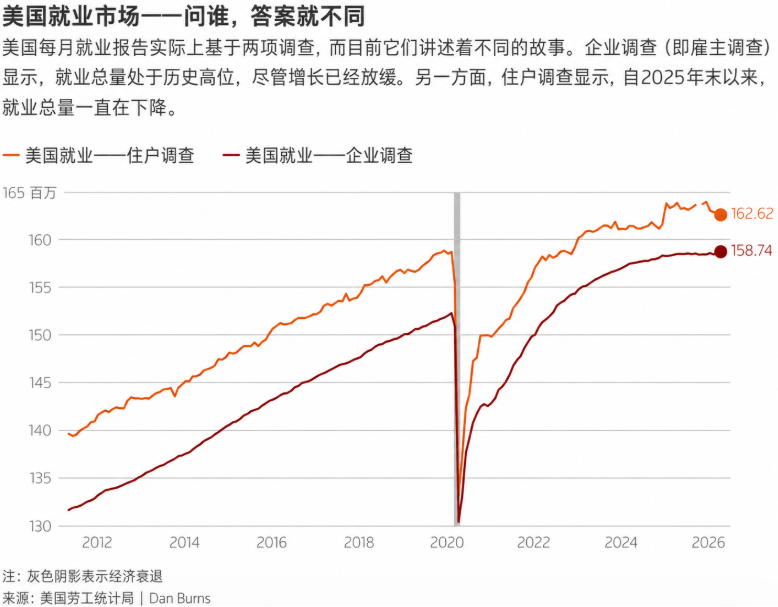
- Job Growth Beats Expectations (Establishment Survey): Non-farm payrolls increased by 115,000 in April, significantly outperforming Wall Street forecasts of 62,000 to 65,000. Additionally, March’s previous figure was revised up from 178,000 to 185,000. Based on business payroll lists, total employment reached a record high of 158.7 million, expanding by 304,000 jobs so far this year.
- Employment Actually Contracts (Household Survey): In contrast to the establishment survey numbers, the household survey shows that overall employment has actually decreased by 1.37 million since the start of 2026. This statistical mismatch highlights a deeper shift in the underlying employment structure.
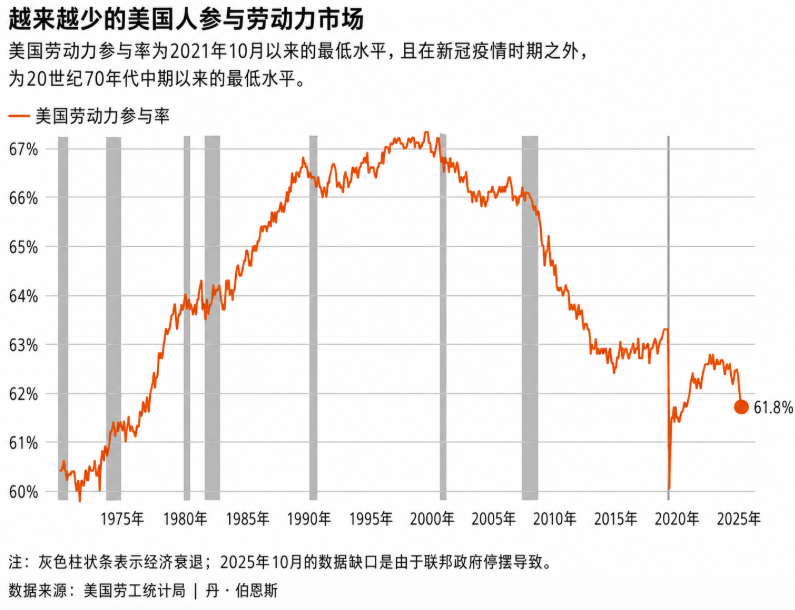
- Unemployment Leveling Off and Participation Sinking: The April unemployment rate held steady at 4.3%. However, the primary reason the unemployment rate didn't tick up was a noticeable drop in the labor force participation rate. It has now fallen to its lowest level since the mid-1970s, stripping out the brief disruption of the 2020 pandemic period.
- Wages and Sticky Inflation: Average hourly earnings rose by a mild 0.2% month-over-month. While this slightly eases concerns about wages driving inflation higher, real purchasing power remains under pressure against a backdrop of headline CPI sitting at 3.3%.
III. Deeper Causes Behind the Data
The divergence between the two surveys in the April NFP report is mainly driven by the following policy shifts and industry trends:
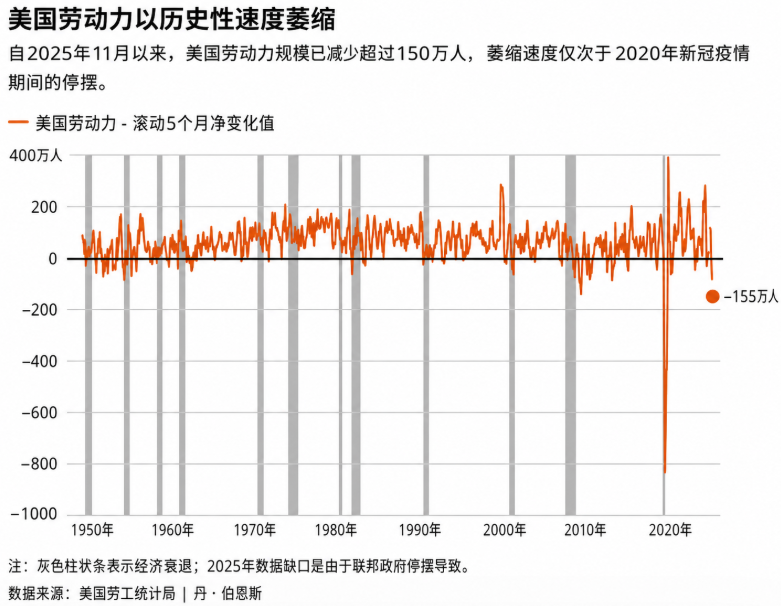
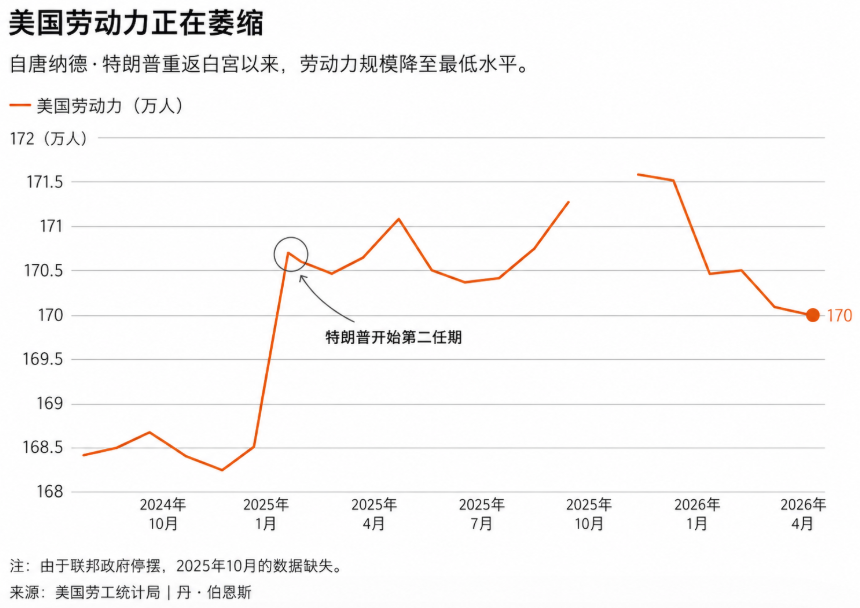
- Shrinking Workforce: The size of the US labor force is experiencing a noticeable contraction. Since hitting a record high in November 2025, a total of 1.55 million people have left the workforce—a contraction second only to the 2020 pandemic lockdown period.
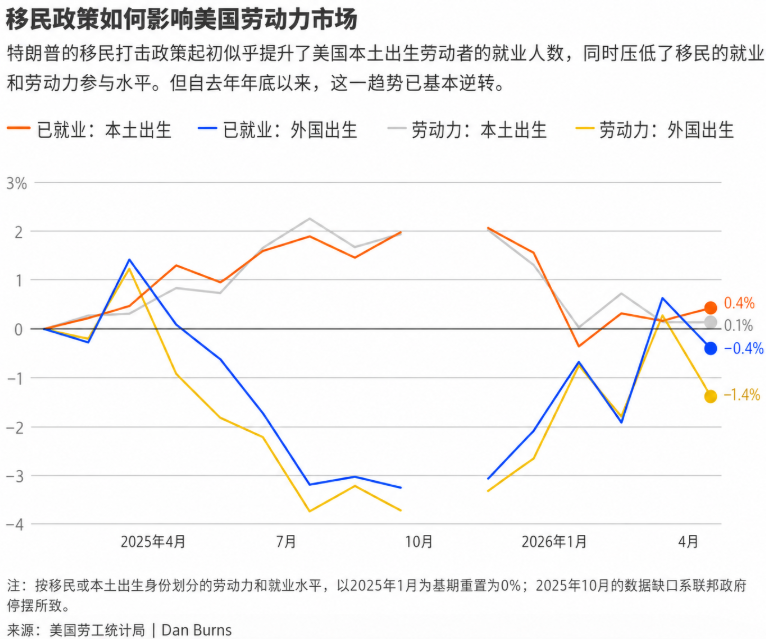
- Impact of Immigration Policies: This contraction is partly due to the Trump administration tightening immigration policies. Since late last year, both employment figures and the participation rate among immigrants have fallen, reversing the immigrant-driven labor growth trend seen under the previous administration.
- Uneven Industry Growth and Manufacturing Job Losses: Hiring remains highly concentrated, with new positions clustered mostly within a few service sectors like healthcare. On the flip side, despite support from tariff policies, manufacturing shed 2,000 jobs in April, snapping a three-month winning streak. The manufacturing sector currently has 77,000 fewer positions than it did in January 2025.
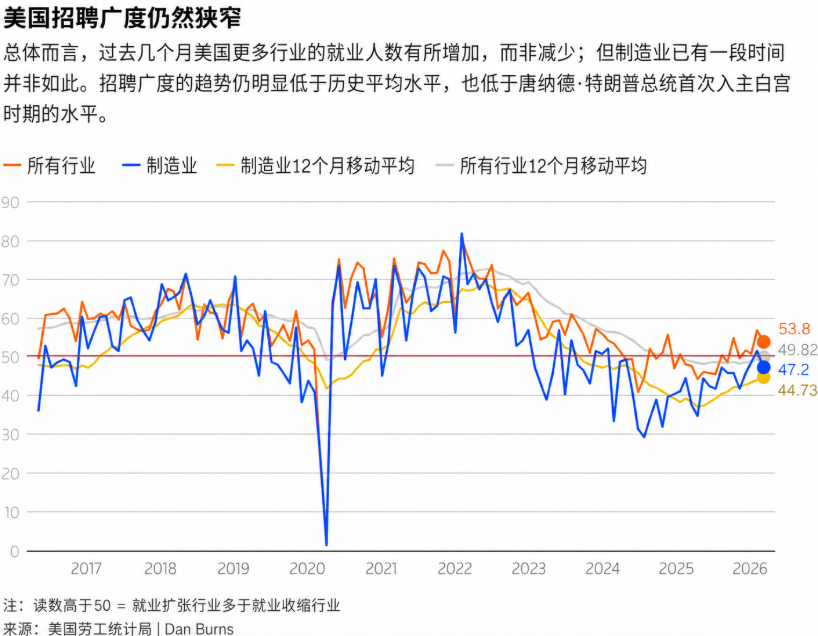
- Artificial Intelligence and Labor Contraction: While the artificial intelligence sector is creating new roles and supporting portions of economic growth, businesses facing rising expenses are accelerating automation and routine cost-cutting measures. This has kept the number of announced layoffs high at over 83,000, though it represents the lowest level since Trump returned to the White House.
IV. Market Expectations and Institutional Views: Easing Hopes Cool, Putting the Fed to the Test
While the April report has eased immediate market anxieties over an economic recession, it presents policy-making hurdles for incoming Fed Chair Kevin Warsh.
- Hopes for Near-Term Rate Cuts Cool Sharply: The combination of relatively robust data and recent oil price spikes has severely lowered market expectations for rate cuts in 2026. Bank of America has pushed its rate cut forecasts out to July and September of 2027, noting that core inflation remains elevated and this year's data simply does not justify easing.
- Internal Splits Emerge Within the Fed: Last week, the FOMC held interest rates at 3.50%–3.75% while maintaining an easing bias. However, this decision triggered dissents from three regional Fed presidents, marking the largest wave of opposition since 1992. They argue that given the inflation risks brought by tariffs and geopolitical conflicts, policy should shift toward a neutral stance or even keep rate hikes on the table.
- Institutional Commentaries:
- Olu Sonola, Fitch Ratings: "The labor market is not booming, but it is proving harder to break than many feared. If unemployment stays this stable, the Fed's attention shifts back to inflation."
- Orion Advisor Solutions: "This report does not provide a compelling case for rate cuts, especially with CPI still at 3.3%."
Conclusion: Watch Out for Inflation Resurgence Risks
The April 2026 NFP report shows that the US economy still retains a level of resilience, leaving the Fed with little incentive to deliver emergency rate cuts. However, a shrinking labor supply, fading immigration dividends, and structural weakness in manufacturing indicate that medium- to long-term economic growth drivers are facing a true test.
Rising oil prices driven by Middle East tensions remain a major wild card. For gold investors, keep a close eye on short-term pressure from a strong dollar, and stay laser-focused on upcoming US CPI data as well as unfolding trade and geopolitical developments.
For a broader macroeconomic perspective on how sticky inflation data and shifting tariff policies are impacting current Federal Reserve choices and GDP trends, you can check out this Bloomberg analysis featuring Olu Sonola. This discussion is highly relevant because it features insights directly from Fitch Ratings expert Olu Sonola on the persistent inflationary pressures and structural economic challenges that are forcing the Fed to maintain its cautious stance.