

I. NFP Summary: Labor Market Beats Expectations
The US May non-farm payrolls data demonstrated robust growth momentum for the third consecutive month, further confirming that the labor market is shaking off last year's weakness. Although wage growth moderated, against the backdrop of the Middle East geopolitical conflict driving up oil prices and overall inflation, this strong employment report significantly eased the Federal Reserve's anxieties over the labor market.
The market's focus has completely shifted to inflation risks, and investors' expectations that the Fed will not only abandon rate cuts but could even pivot to "rate hikes" by the end of the year are rapidly heating up.
II. Detailed Data Interpretation
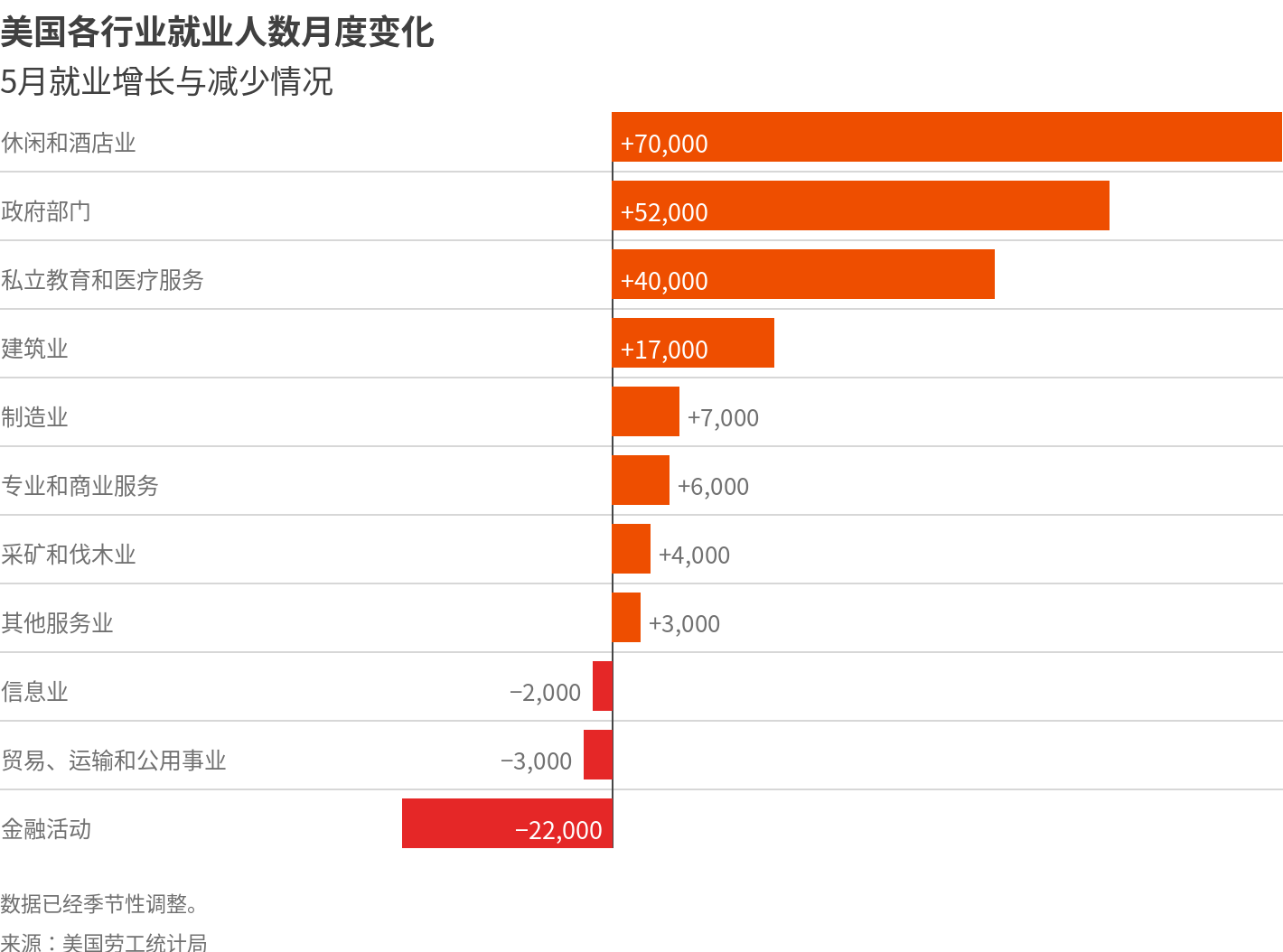
- Job Growth Sharply Exceeded Expectations: Non-farm payrolls increased by 172,000 in May, far exceeding the market expectation of 85,000. More importantly, the data for March and April were upwardly revised by a combined 93,000 jobs (with April revised up from 115,000 to 179,000, and March from 185,000 to 214,000). This indicates that the employment momentum in recent months was much stronger than previously estimated.
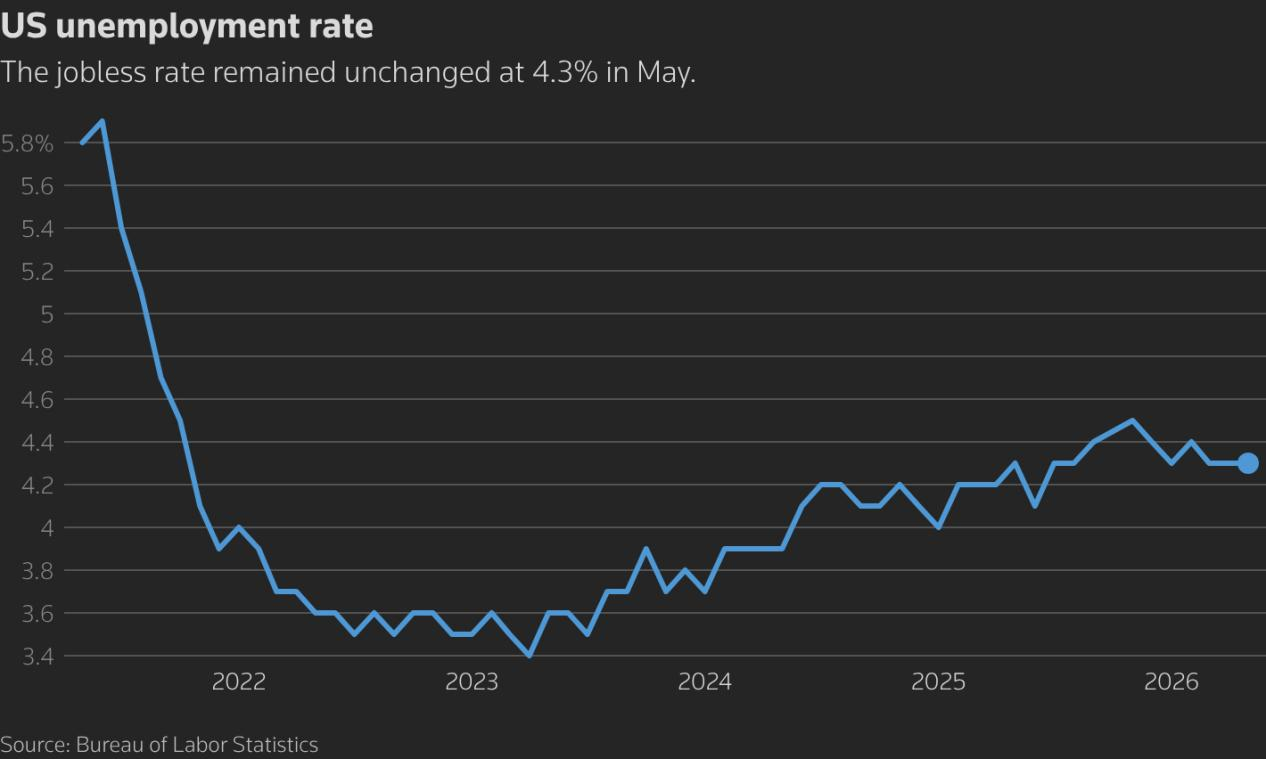
- Unemployment Held Steady, but Participation Remained Low: The household survey showed that the employed population increased by 149,000 in May, which was enough to absorb the 83,000 people entering the workforce, keeping the unemployment rate steady at 4.3% for the third consecutive month. However, the labor force participation rate remained stuck at 61.8%, a four-and-a-half-year low. Since last December, the total US labor force has shrunk by about 1.4 million people.
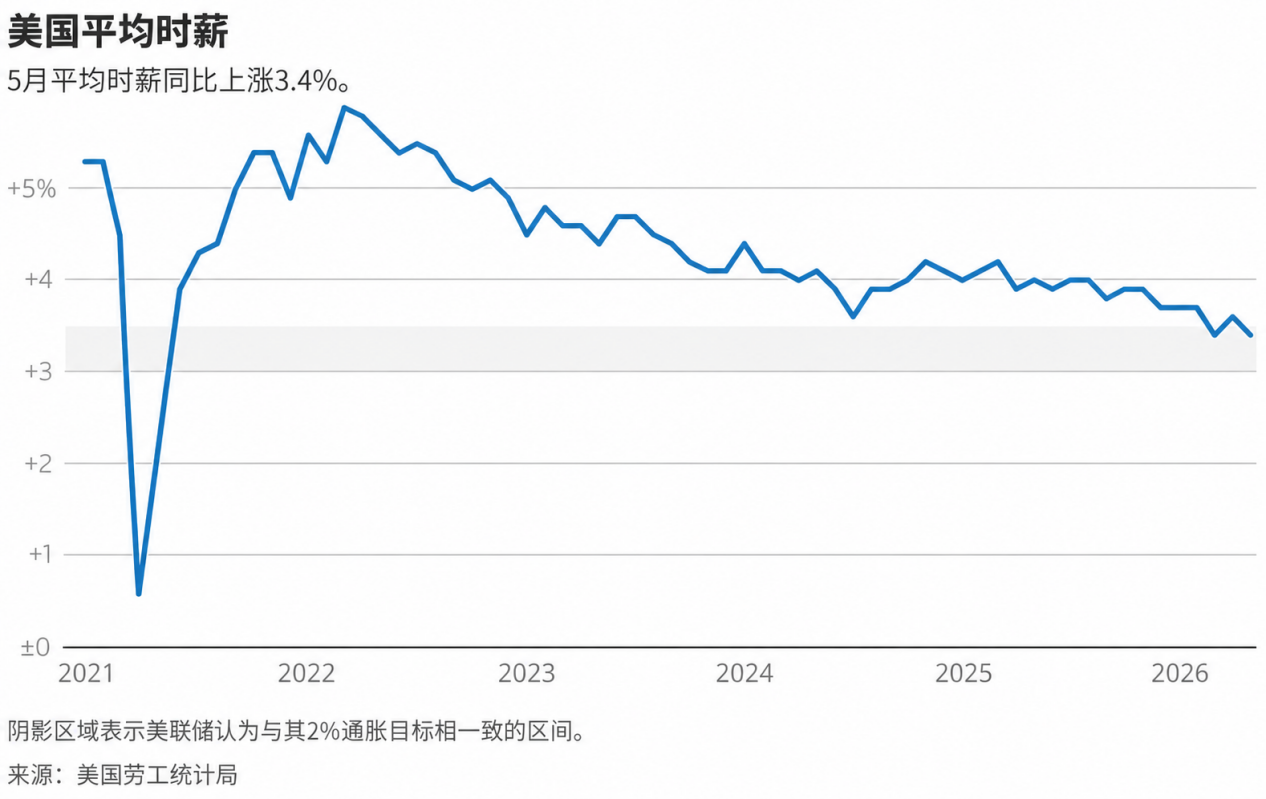
- Real Wages Eroded by Inflation: The year-over-year growth rate of average hourly earnings slowed from April's 3.6% to 3.4%. With the current headline inflation rate sitting as high as 3.8%, real wage growth is effectively negative, which is gradually eroding consumer purchasing power.
III. Deeper Causes Behind the Data
The performance of the May NFP data was primarily driven by the upcoming World Cup and policy reforms:
- The Breadth of Hiring Broadened Noticeably: Unlike the previous heavy reliance on a few non-cyclical sectors like healthcare, the percentage of industries reporting job gains rose to 54.4% in May, hitting a six-month high. Among them, leisure and hospitality delivered the most stellar performance, adding 70,000 jobs (with restaurants and bars accounting for 48,000). This was partly driven by early hiring demand tied to the upcoming soccer World Cup, which the US is co-hosting.
- Policy Tax Refunds Offset the High Oil Price Shock: Following the Supreme Court's rejection of the universal tariff policy in February this year, many companies applied for tax refunds. The large-scale refunds of income tax and tariffs provided a buffer for businesses and consumers, giving companies the confidence to maintain hiring as Q2 profits recovered, thus avoiding mass layoffs.
- The Plight of the Long-Term Unemployed Deepened: Despite the increase in overall employment, the number of long-term unemployed (those out of work for 27 weeks or more) rose by 155,000 to reach 1.988 million, the highest level since December 2021. Concurrently, the median duration of unemployment jumped to 11.6 weeks, indicating that individuals who lose their jobs are taking much longer to find new positions in the current environment.
IV. Market Expectations and Institutional Views: The Rate Hike Option Is Back on the Table
The robust employment data has given the newly appointed Fed Chair, Kevin Warsh, more leverage to focus entirely on controlling inflation.
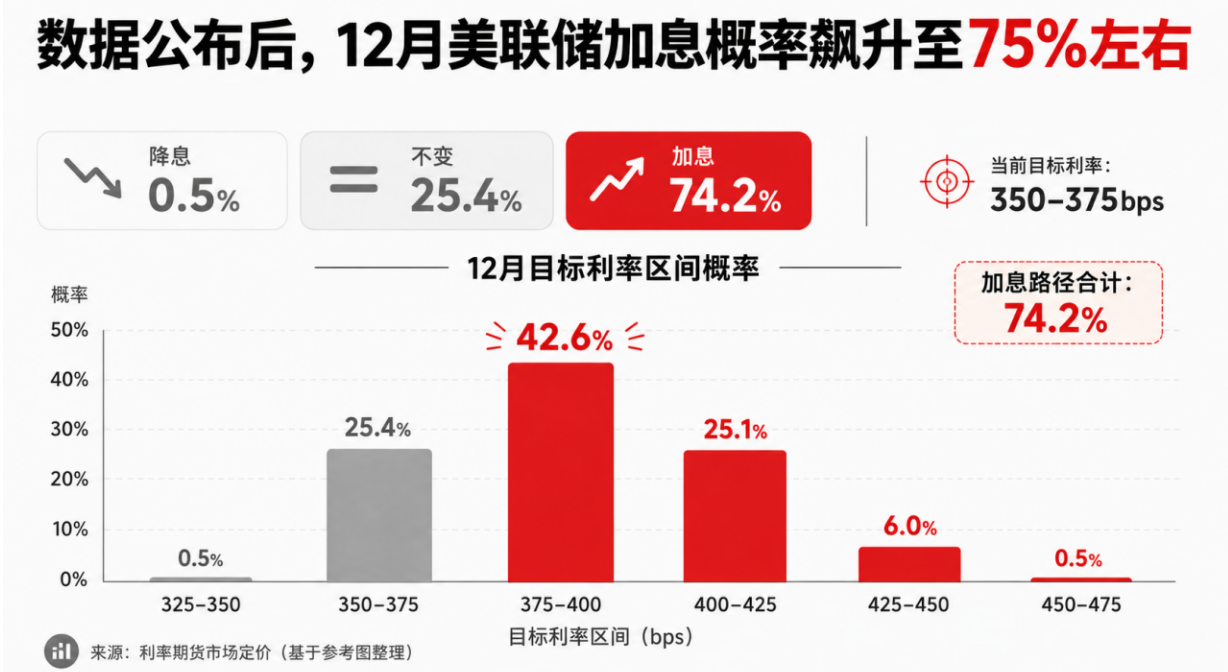
- Year-End Rate Hike Probability Surged: Following the data release, the interest rate futures market showed the probability of a December Fed rate hike skyrocketing to around 75% (up from roughly 48%–50% before the release). The market has essentially ruled out the possibility of a rate cut this year.
- Institutional Commentaries:
- Wells Fargo: "This confirms the labor market is not slowing down. The strength of the economy exacerbates the inflation risks posed by crude prices. This makes it very difficult for the Fed to consider rate cuts, and instead increases the likelihood of a rate hike before the end of the year."
- Spartan Capital Securities: "This report proves that the labor market has weathered the recent slowdown phase. This is yet another reason to believe the Fed's next move will be a rate hike."
- Bannockburn Global Forex: "The bar to shift Fed policy right now is incredibly high. At Chairman Warsh's debut meeting (June 17), I cannot imagine them hiking right away, but the chances of a rate hike by the end of the year are indeed very high."
V. Gold Under Pressure
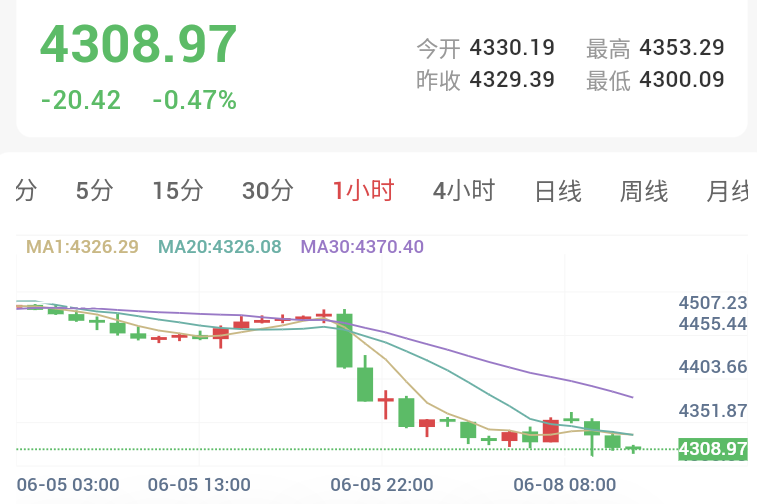
Directly suppressed by rate-hike expectations and a strengthening US dollar (with the US Dollar Index climbing to 99.60), spot gold prices plummeted by about 3% on Friday, touching their lowest point since March 24. Gold is currently trading around $4,308.97 per ounce. Although the People's Bank of China increased its gold reserves for the 19th consecutive month in May, geopolitical tensions in the Middle East remain high, keeping market anxieties over the high US interest rate environment elevated.
VI. Conclusion: Inflation Becomes the Absolute Focus
The May 2026 NFP report confirms that the US economy remains resilient and flexible. For the Fed, the labor market is temporarily no longer a policy constraint, allowing policymakers to concentrate fully on tackling the inflationary pressures triggered by geopolitical conflicts.
The dominant market trading narrative has clearly shifted toward "inflation defense" and "higher for longer (or even higher) interest rates.
" In the next phase, investors should closely monitor actual inflation data (such as CPI) to see if high inflation will ultimately force the Fed to pull the trigger on a rate hike.