

I. NFP Summary: Structural Cracks Behind Better-Than-Expected Growth
The US January non-farm payrolls data recorded its strongest growth in 13 months. However, the annual benchmark revision simultaneously revealed that the 2025 labor market was virtually frozen. This creates a contradictory "hot today, cold yesterday" report, proving that the true temperature of the labor market is far more complex than it appears on the surface.
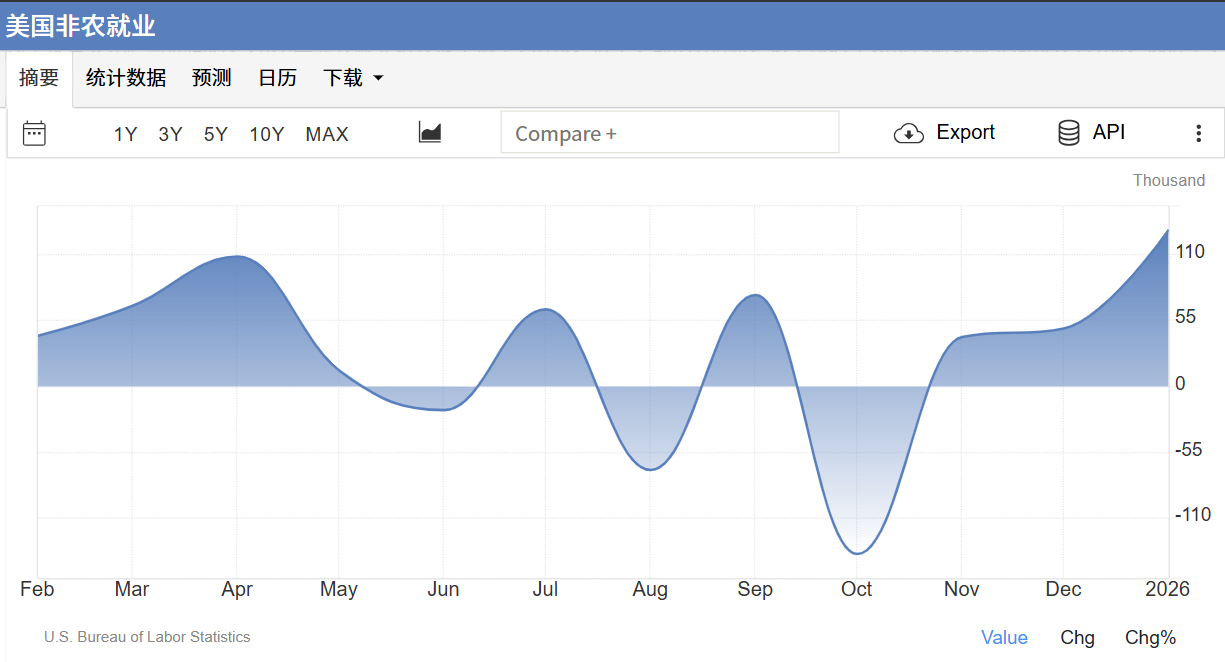
- Job Growth Far Exceeded Expectations: Non-farm payrolls increased by 130,000 in January, significantly higher than the market expectation of 70,000, while the previous December figure was revised down to 48,000. This marks the largest single-month gain since December 2024.
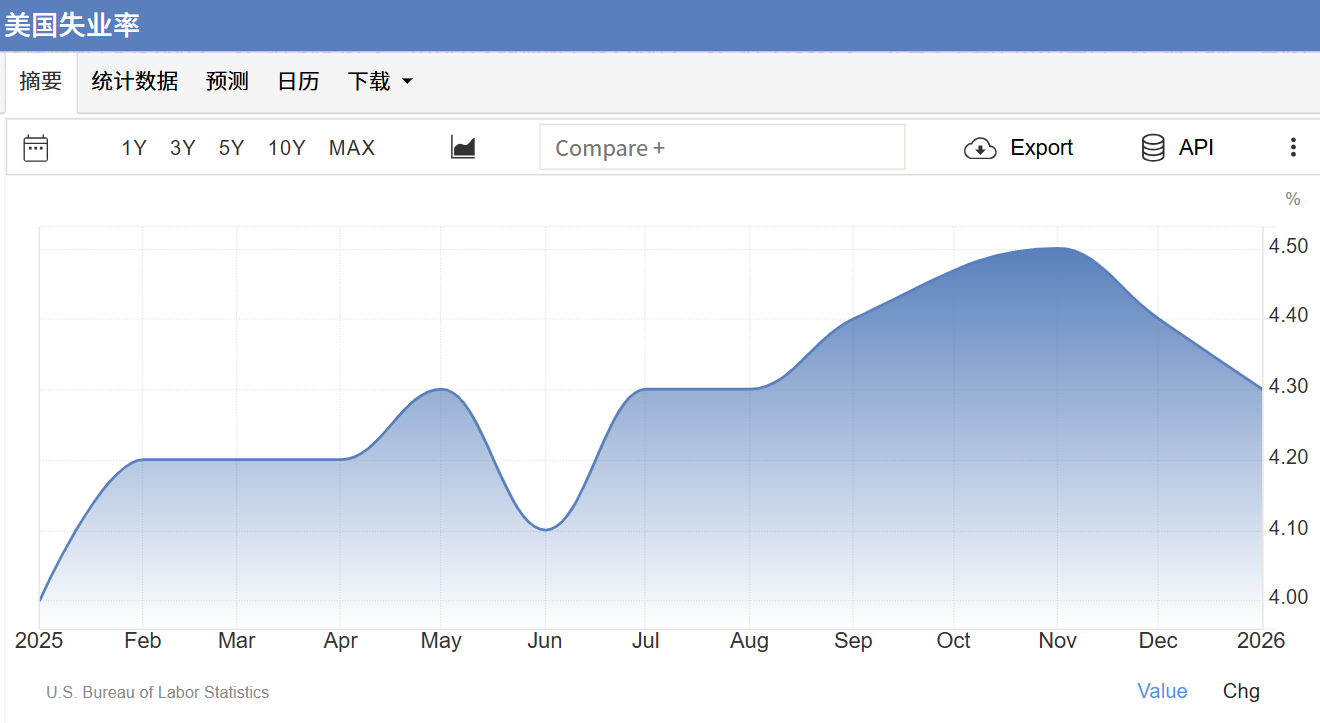
- Unemployment Rate Unexpectedly Dropped: The unemployment rate fell from 4.4% to 4.3%, but the household survey response rate was only 64.3% due to severe winter storms, leaving data reliability open to question.
- A Double Blow from Previous Data and Benchmark Revisions:
- October’s job loss was further revised downward to 173,000 (from the initial 105,000).
- The annual benchmark revision showed that for the 12 months ending March 2025, employment was revised downward by 862,000. Actual job growth for the full year of 2025 was just 181,000 (previously reported as 584,000), causing the monthly average gain to plummet from 49,000 to 15,000. Excluding 2020, this marks the slowest annual growth rate since 2010.
II. Special Background: Delayed Release and the Dual Adjustment of Statistical Methods

- A Brief Government Shutdown Disrupted the Release: Due to a three-day federal government shutdown, the January report was delayed until February 11. While the statistical compilation process was not materially affected, the household survey was disrupted by severe cold weather, resulting in a lower-than-normal response rate.
- The Birth-Death Model Was Officially Updated: Starting in January, the Bureau of Labor Statistics (BLS) began using a new method to estimate job changes from business births and deaths, blending current sample information on a monthly basis. This model update could reduce future monthly job growth by up to 50,000 compared to previous methods.
- Population Control Adjustments Were Postponed: The annual population control adjustments for the household survey, which normally accompany the January report, were pushed back to the February report. This means immigration data will be integrated into the updated population estimates for the first time.
III. Structural Concerns: The Illusion Underneath Prosperity
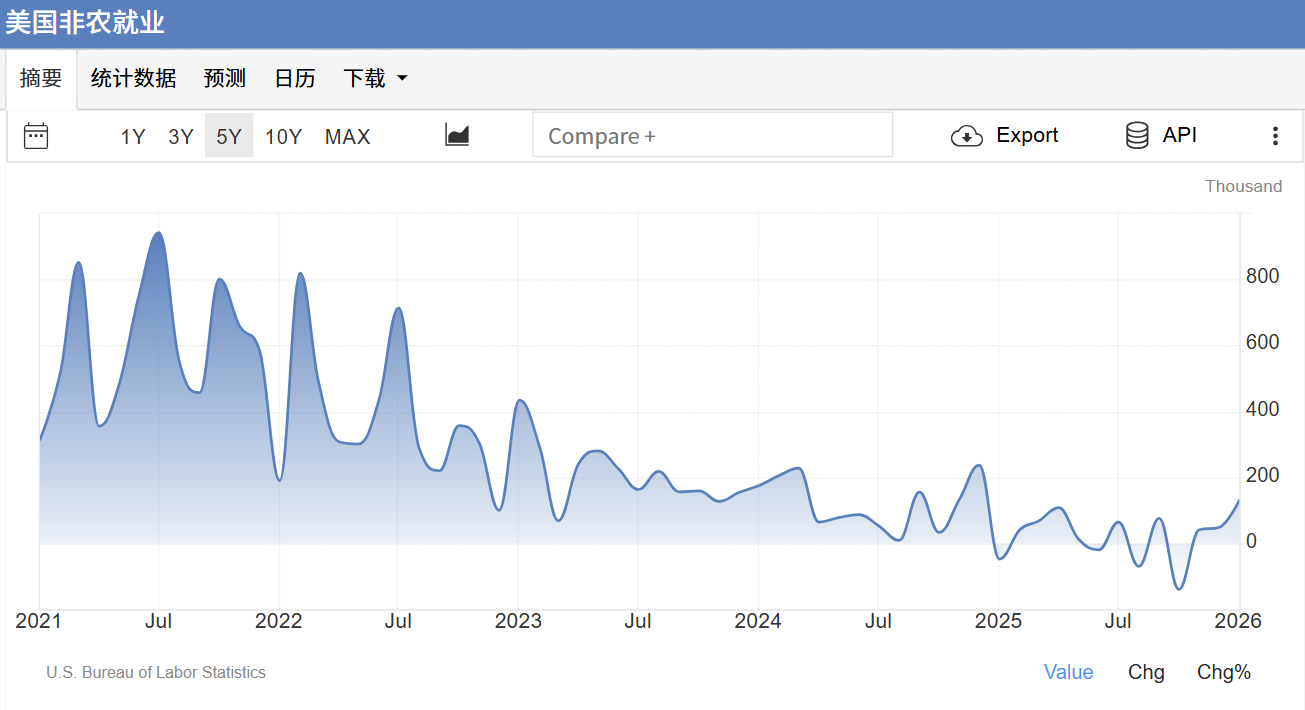
- 2025: A Year of Job Stagnation Trapped Between Policy and AI: The monthly average gain for the full year was just 15,000, less than a tenth of 2024's 168,000 and far below the 2010–2019 average of 183,000. Trump's trade tariffs, a sharp drop in immigration, and companies using AI investments to replace human labor served as the three main suppressing factors.
- Growth Was Extensively Concentrated: In January, healthcare (+82,000) and social assistance (+42,000) accounted for nearly 95% of the net job gains, leaving other industries generally weak or in negative growth. Although manufacturing saw a minor uptick, the sector has shed over 80,000 jobs since Trump returned to the White House.
- The Federal Government Continues to Downsize: Employees who accepted the 2025 delayed resignation plan have steadily departed, causing federal positions to drop by another 34,000 in January. This brings total cuts to 327,000 since the peak in October 2024.
IV. Market and Institutional Reactions: Rate Cut Expectations Cool Down
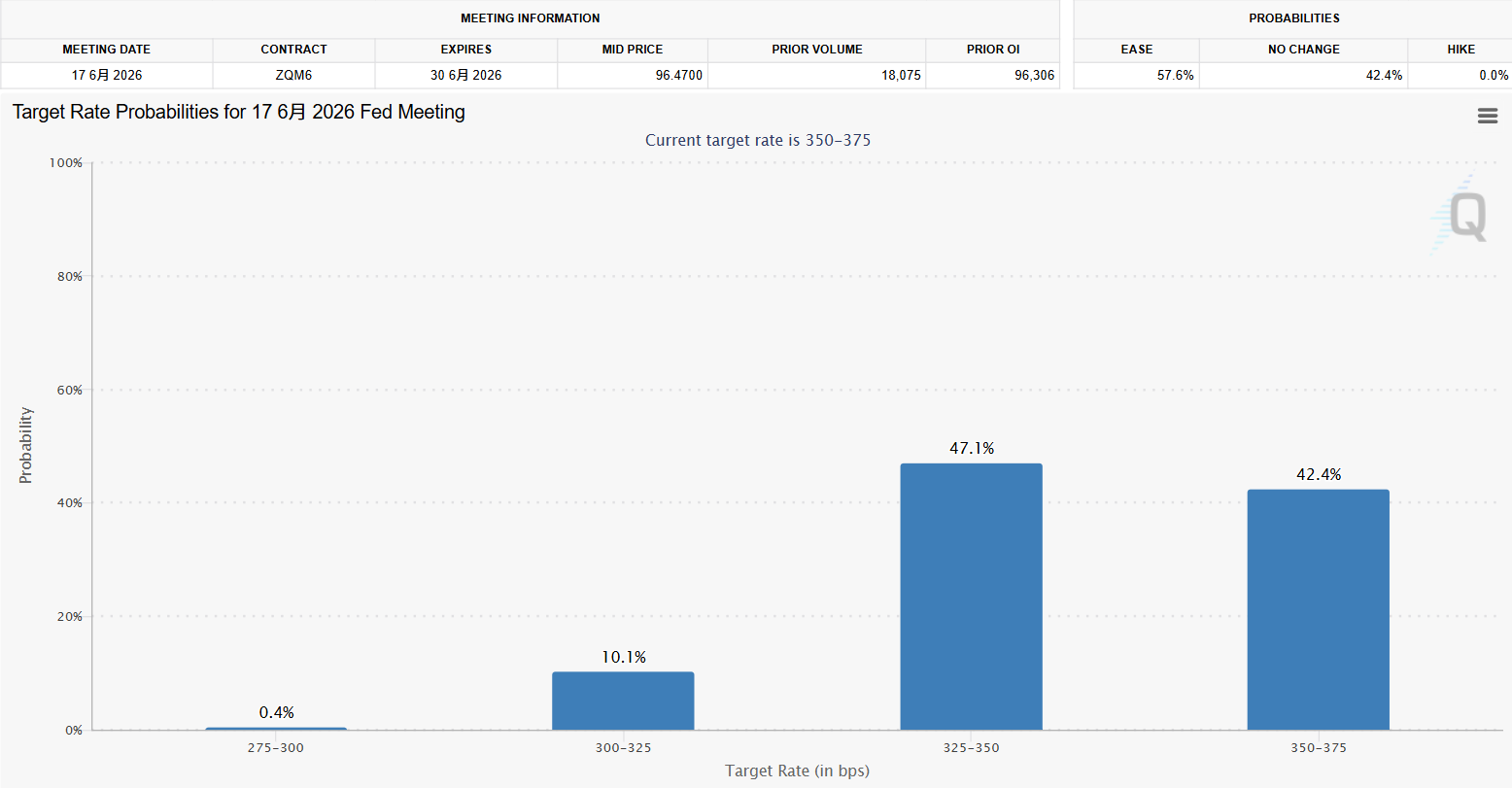
- Interest Rate Expectations Repriced: The CME FedWatch Tool showed that the probability of a June rate cut dropped to 57.6% from 75% prior to the data release. Following the January meeting, the market has essentially priced in a "higher-for-longer" stance from the Fed.
- Institutional Views: Stable Employment Does Not Mean Strong Growth, and the Policy Observation Window Extends:
- Stephen Stanley, Santander: "This report is enough to smash the narrative that the labor market is about to collapse, but this level of strength is unsustainable."
- Olu Sonola, Fitch Ratings: "The pullback in the unemployment rate eases the Fed's urgency to support the labor market, but the issue of stagnant job growth has not vanished."
- Seema Shah, Principal Asset Management: "Even when allowing for data noise, the January report was strong enough. Until inflation shows a clear, sustained slowdown, the labor market will not give Kevin Warsh (the Fed Chair nominee) a reason to cut rates."
V. Gold Price Forecast: The Narrative Shift Behind the $5,100 Breakout
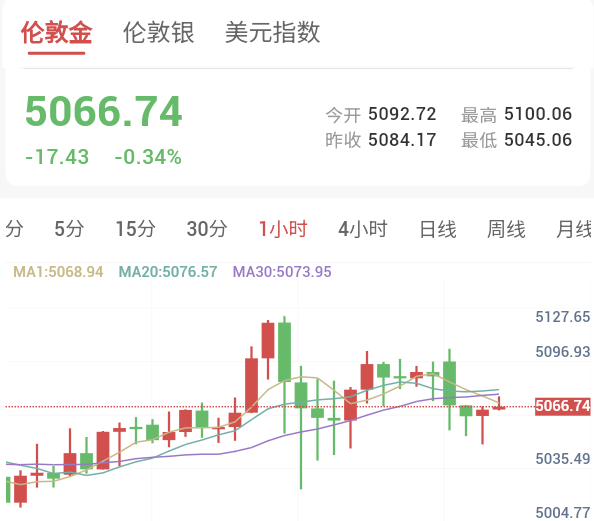
- Short-Term Test: The better-than-expected January NFP initially dented gold prices, but bulls took only a few hours to reclaim lost ground. Spot gold hit a high of $5,118 before closing at $5,084.17, expanding its year-to-date gains to 17%.
- The bearish data completely failed to leave an impact. With US carrier strike groups heading to the Middle East again, uncertainty surrounding the Iran nuclear deal, and Trump's "Greenland purchase" dispute continuing to simmer, the long-term erosion of the US dollar's credibility is ongoing.
Conclusion
The 862,000 downward adjustment in the annual benchmark revision for the January 2026 NFP report completely rewrote the economic narrative of 2025—proving the labor market never possessed true resilience but had instead been running at a low temperature all along. For the Fed, the January data validates the choice to pause rate cuts, but it stops short of providing a reason to restart rate hikes. When three major bearish factors—better-than-expected payrolls, delayed rate-cut expectations, and a rebounding dollar—hit simultaneously, gold still managed to close up 1.2%. This is no longer a short-term sentiment-driven move; it signals a fundamental regime shift. For investors, stressing over the next non-farm payroll number might become increasingly meaningless.